- Home
-
- Industries
-

Explore The Application And Importance of Plastic Seals
Views: 0 Author: Site Editor Publish Time: 2026-05-06 Origin: Site


Securing global supply chains requires more than pure physical strength. Heavy-duty locks simply cannot prevent all breaches. Savvy attackers often bypass brute force entirely. This reality makes tamper-evident tracking equally critical for comprehensive asset protection. Today, a plastic seal serves not as a foolproof physical barrier, but as a mandatory indicator of compromise. It acts as a vital data point within a layered security strategy. If a container arrives compromised, this simple device provides immediate, undeniable visual proof.
This guide will help procurement, logistics, and compliance teams evaluate these essential tools. We will show you how to select and manage the right seals for your daily operations. You will learn to assess them based on structural integrity, traceability, and Total Cost of Ownership (TCO). By the end, you will understand how to build a more accountable, tamper-resistant supply chain.
Key Takeaways
Plastic seals are primarily visual and physical indicators of compromise, designed to maintain the "chain of custody" rather than resist heavy tool attacks.
Selection depends heavily on the locking mechanism (e.g., anti-return metal inserts vs. acetal notching) and material science (e.g., PP/PE vs. Nylon) suited for specific environmental stressors.
Modern implementation goes beyond basic sealing; it involves rigorous SOPs for serial number tracking, laser-marked barcoding, and structured tamper-inspection protocols.
Proper deployment aids in regulatory compliance (e.g., ISO guidelines, CBP regulations) and can directly impact enterprise risk profiles, including insurance premium reductions.

Why Procurement Teams Prioritize the Plastic Seal: Business Value & Accountability
The "Indicator vs. Barrier" Concept
Many organizations confuse the purpose of different sealing technologies. Heavy-duty metal locks act as literal barriers. They delay entry and demand heavy cutting tools. Conversely, plastic designs prioritize immediate visual evidence. They function as tamper indicators rather than impenetrable walls. When someone forces unauthorized entry, the material snaps, stretches, or blushes white. You immediately know a breach occurred. This clear distinction helps security teams allocate resources effectively. You do not use plastic to stop a determined thief. You use it to guarantee you know if they tried.
Chain of Custody Maintenance
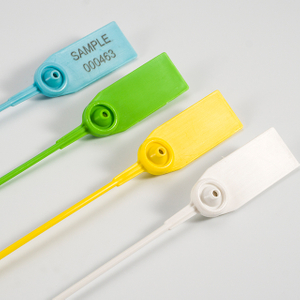
Modern supply chains run on accountability. You must know who handled an asset and when they touched it. Unique identifiers make this possible. Manufacturers print laser-marked serial numbers and barcodes directly onto the seal flag. This data ties a specific closed asset to a definitive moment in time. It also links the action to an authorized employee. If a truck arrives showing a different serial number than the departure manifest, the chain of custody is broken. This strict accountability deters internal theft. Employees know security teams trace discrepancies directly back to the last logged handler.
Risk Mitigation & TCO
Procurement teams often look strictly at unit costs. However, evaluating the Total Cost of Ownership reveals hidden ROI. High-quality sealing reduces overall shrinkage. It deters opportunistic theft during transit. Furthermore, documented tampering streamlines insurance claims. If you provide physical proof of compromise, adjusters process claims much faster. These tools also protect brand reputation. Historical public health incidents involving adulterated goods demonstrate the catastrophic cost of undetected tampering. Investing in reliable indicator technology mitigates these massive liability risks.
Structural Anatomy: Types of Plastic Security Seals and Locking Mechanisms
Form Factor Categories
You must align the seal's physical shape to your operational needs. Different applications demand different flexibility.
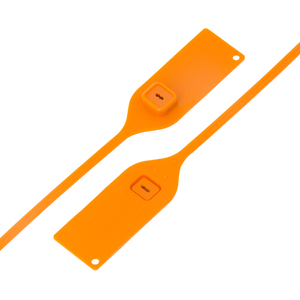
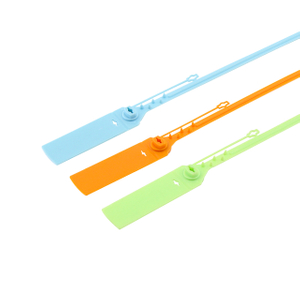
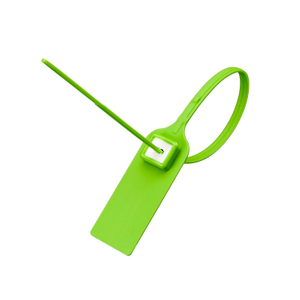
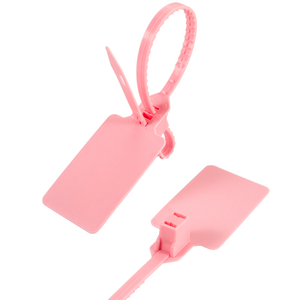
Pull-Tight (Adjustable) Seals: These offer maximum flexibility. You pull the tail through the locking chamber to the exact tightness required. They work best for irregular closures. Use them on cash bags, evidence pouches, and roll cages.
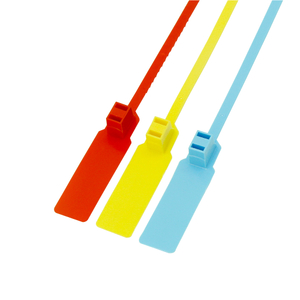
Fixed-Length Seals: These provide a standardized loop size. They do not tighten around the asset. They deliver consistent, predictable tension. This makes them ideal for standardized operations like truck doors and uniform shipping containers. They offer high tamper resistance because their locked state leaves no excess tail for manipulators to grip.
Here is a quick comparison table to guide your selection:
Feature
Pull-Tight Seals
Fixed-Length Seals
Adjustability
Variable length; cinches tight
Pre-set loop; clicks into place
Best Fit
Bags, pouches, variable hasps
Truck doors, standard containers
Tension Level
High tension on the item
Loose fit; consistent loop size
Locking Mechanism Deep Dive
The internal lock represents the core differentiator in product evaluation. A weak lock invalidates the entire system.
Notching/Acetal Inserts: This design uses a toothed strap. You pull it through an acetal locking chamber. It allows progressive tightening. It provides solid baseline security for low-risk applications.
Anti-Return Metal Inserts: High-security models feature an embedded metal locking clip. This clip grips a completely smooth strap. If someone attempts forced reversal, the metal teeth bite deeper into the polymer. This mechanism makes non-destructive removal virtually impossible.
Breakage Thresholds
Manufacturers frame their specifications around required manual exertion. You must match the breakage threshold to the end-user's reality.
Light-Duty (approx. 3kg pull strength): These allow manual tear-off. Workers remove them without tools. They suit retail and medical applications.
Medium-Duty (approx. 5-8kg pull strength): These require firm, deliberate force. They prevent accidental breakage during rough transit.
High-Security (8kg–12+kg pull strength): These demand cutting tools. You cannot break them by hand. They secure heavy freight and high-value cargo.
Critical Applications: Aligning the Right Plastic Security Seal to the Industry
Logistics & Freight
Transportation networks rely on robust sealing protocols. Logistics teams secure truck trailers and secondary container points daily. Proper sealing reduces en-route theft significantly. It also ensures compliance during cross-border transit. The Customs and Border Protection (CBP) agency requires strict manifestation. If a border agent cuts your seal for inspection, they apply a new one and update the paperwork. A reliable fixed-length design speeds up this auditing process.
Pharmaceutical & Food Service
Public health sectors face strict regulatory scrutiny. Contamination can destroy a company overnight. Food and pharmaceutical producers seal ingredient totes and final packaging aggressively. They guarantee hygiene from the factory to the consumer. A broken seal immediately alerts receiving personnel to reject the shipment. This practice complies with strict health authority regulations. It protects end-users from compromised or adulterated consumables.
Retail & Financial Operations
Banks and large retailers handle massive cash volumes. They secure ATM cassettes and cash-in-transit bags rigorously. These environments require rapid, tool-less application. A teller must seal a bag in seconds. However, tracking remains absolutely non-negotiable. Adjustable pull-tight designs dominate this sector. They cinch down tightly onto fabric bags. They prevent anyone from reaching inside without leaving glaring physical damage.
Application Matching Chart:
Industry
Primary Asset Secured
Recommended Seal Type
Key Compliance Driver
Logistics & Freight
Trailer doors, Totes
Fixed-Length, High-Strength
CBP, Customs manifest
Pharma & Food
Ingredient bins, Medical kits
Pull-Tight, Light-Duty tear-off
FDA, Hygiene standards
Finance & Retail
Cash bags, ATM cassettes
Pull-Tight, Anti-return insert
Internal Audit, Loss prevention
Decision Framework: Evaluating and Shortlisting Your Seal Provider
Material Science & Environmental Compatibility
Not all polymers perform equally in the field. Polypropylene (PP) and Polyethylene (PE) provide excellent standard durability. They handle normal warehousing conditions perfectly. However, extreme environments demand tougher chemistry. High-Density Nylon resists extreme temperature drops and severe mechanical stress. It will not shatter in freezing weather. You must aggressively avoid brittle, low-grade PVC formulations. Inferior PVC degrades under UV light. It snaps prematurely when exposed to extreme cold, causing false alarms.
Traceability & Marking Technologies
Data readability dictates the long-term value of your tracking system. Always evaluate the durability of tracking markings. We strongly recommend laser marking over standard ink printing. Ink rubs off under industrial friction. It fades in harsh weather. Laser marking physically alters the polymer surface. Manufacturers often add specific polymer additives to increase marking contrast. This ensures barcodes and serial numbers survive aggressive handling. If your team cannot read the barcode upon arrival, the entire security protocol fails.
Compliance & Manufacturing Standards
Vendor selection requires careful vetting. Shortlist vendors based on their documented adherence to international standards. Demand proof of ISO 9001 certification. This guarantees they utilize proper quality management systems. Furthermore, check their testing data against ISO 17712 functional standards. Even if you purchase a purely indicative model, reliable vendors still subject their products to rigorous tensile strength testing.
Inventory Optimization
Best Practice: Standardize your inventory. Advise your procurement department to consolidate seal types and lengths across departments. Do not order ten different variations if two can cover all operational needs. This strategy reduces SKU bloat. It simplifies bulk procurement and lowers unit costs.
Common Mistake: Allowing individual warehouses to buy off-brand, un-numbered seals locally. This destroys central data tracking and opens massive security loopholes.
Implementation SOPs: Best Practices to Maximize Security ROI
Issuance & Logging
Technology alone cannot secure an asset. You need strict procedural discipline. Management must mandate formal logbooks. These can be digital scanning systems or physical paper ledgers. The log must capture the seal serial number, the exact application time, and the applying personnel's name. Furthermore, you must store unused inventory securely under lock and key. Internal bad actors frequently steal unassigned seals. They break a legitimate lock, steal the cargo, and replace it using a stolen "dummy" seal to hide their tracks.
Spotting a Tampered Plastic Security Seal
Train your receiving teams to act as active inspectors. They must look beyond the serial number. They need to recognize the physical signs of compromise.
White Stress Marks: Look for "blushing" on the plastic near the locking chamber. This indicates someone pulled the strap forcefully.
Heat Signs: Check for superficial cuts, glue residue, or melted sections. Attackers sometimes cut the strap and attempt to melt it back together.
Data Alteration: Look closely at the numbers. Reject the shipment if you see mismatched digits or scratch marks over the barcode.
Removal & Disposal Protocols
The security lifecycle ends at disposal. Establish firm rules for authorized cutting. Personnel must verify the broken pieces against the receiving manifest before discarding them. After verification, workers must destroy the locking mechanism completely. Cut through the lock itself. This prevents bad actors from salvaging the pieces for post-transit reassembly. A destroyed lock guarantees nobody will reuse it maliciously.
Conclusion
Choosing the right solution requires balancing tensile strength, internal locking mechanics, and tracking capabilities.
You must align the polymer material directly against the specific environmental demands of your supply chain.
Implementation succeeds only when paired with rigorous logging, secure storage, and trained visual inspection.
Your next step requires an internal audit. Review your current mechanical locking mechanisms today. Analyze your failure rates to distinguish between accidental breakage and undetected tampering. Once you understand your vulnerabilities, request physical samples and material specifications from compliant manufacturers. Conduct real-world field testing to validate your new security protocols.
FAQ
Q: Are plastic seals ISO 17712 compliant?
A: Most pure plastic models act as indicative tamper seals, not high-security barriers. ISO 17712 primarily governs heavy-duty metal bolt and cable seals used for international shipping. However, certain hybrid plastic-metal designs do meet specific regulatory tiers for indicative testing within the ISO framework.
Q: What is the difference between a pull-tight and a fixed-length plastic seal?
A: Pull-tight models feature an adjustable strap. You cinch them tight around irregular objects like bags or valves. Fixed-length models click into a preset loop size. They provide standardized tension and offer higher tamper detection for uniform latches, like truck doors.
Q: How do we ensure the serial numbers on our plastic security seals won't fade or rub off?
A: Choose products utilizing high-contrast laser marking rather than thermal ink printing. Laser marking alters the actual polymer surface, often aided by specific chemical additives. This makes the data highly resistant to industrial friction, extreme weather, and chemical exposure.
Q: Can plastic seals be recycled?
A: Yes. Modern manufacturing frequently utilizes recyclable Polypropylene (PP) and Polyethylene (PE) materials. Furthermore, many progressive vendors now incorporate biodegradable additives, allowing the polymer to break down faster in landfill environments without compromising field strength.