- Home
-
- Industries
-

Find Out Why Cable Seals Are The Best Choice For Security
Views: 0 Author: Site Editor Publish Time: 2026-06-01 Origin: Site


Cargo theft costs global supply chains billions of dollars annually. Basic indicative seals no longer provide adequate protection for high-value transits. They often snap under minimal pressure. Supply chain operators must adapt to these escalating threats immediately. You need a paradigm shift in your operational security strategy. You must move away from merely monitoring tampering. You must actively defend your shipments against intrusion. Cable Seals serve as this essential physical barrier. They fortify modern logistics networks effectively. We will focus entirely on objective, evidence-based realities here. You will learn about mechanical engineering principles and global compliance standards. We strip away the marketing fluff to examine how these devices actually perform. You will discover the internal locking mechanisms that prevent unauthorized access. You will also learn proper full-lifecycle management techniques. This guide delivers the actionable facts you need to secure your cargo fleets confidently.
Key Takeaways
High security cable seals provide a dual function: undeniable tamper evidence combined with a formidable physical barrier.
Procurement decisions must be driven by ISO 17712 and C-TPAT compliance, not just unit cost.
Internal locking mechanisms (spring and steel ball) make non-destructive removal physically impossible.
Effective security requires full-lifecycle management, from proper sizing to secure disposal.
The Mechanical Advantage: Why Cable Seals Defend Rather Than Just Monitor
The Barrier vs. Indicative Shift
You must understand the difference between indicating a breach and preventing one. Single-wire models only serve an indicative function. Thieves easily defeat them using standard household scissors. They offer zero physical resistance. Braided multi-strand models operate differently. They function as true barrier seals. An attacker must use heavy-duty industrial bolt cutters to breach them. This fundamental shift turns a simple visual deterrent into a robust physical defense.
Internal Locking Architecture
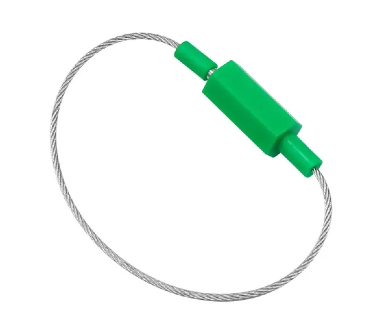
The internal engineering defines the security level. The lock body features a precision countersunk hole. Inside this chamber sits a specialized spring. A hardened steel ball rests directly against it. You insert the wire into the locking chamber. The insertion tension pushes the steel ball backward. The ball then slides perfectly into the braided wire grooves. This mechanism creates an irreversible, one-way lock. The harder someone pulls the wire, the tighter the steel ball wedges into the groove. Non-destructive removal becomes physically impossible.
Material Realities
Manufacturers rely on aviation-grade galvanized steel. They specifically choose non-preformed wire. This engineering choice serves a critical security purpose. When someone cuts preformed wire, it retains its shape. Attackers might try to re-thread it. Non-preformed braided wire acts differently. When cut, it immediately unravels. The individual metal strands splay outward uncontrollably. Thieves cannot re-insert the frayed ends into the lock body. They cannot disguise the breach. It forces undeniable tamper evidence.
Core Evaluation Criteria for High Security Cable Seals
Tensile Strength & Diameter Mapping
You need clear baseline expectations before procurement. Pulling force directly correlates to the wire diameter. We break down the general categories below.
Category
Diameter Range
Pulling Force Capacity
Ideal Applications
Light-Duty
1.5mm - 3.5mm
~650kg to 1150kg
Domestic trucks, warehouse transfers, meter boxes
Heavy-Duty
5mm - 6mm+
2000kg+
International shipping containers, rail cars, high-risk cargo
Light-duty models offer excellent flexibility. They navigate tight locking spaces easily. However, they do not meet international customs requirements. Heavy-duty models provide massive tensile strength. They serve as the mandatory standard for ocean freight.
Body Material Trade-offs
The lock housing material significantly impacts performance. Each material offers distinct advantages and specific vulnerabilities. You must match the material to your operational environment.
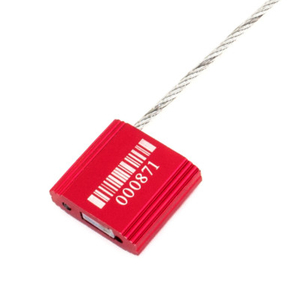
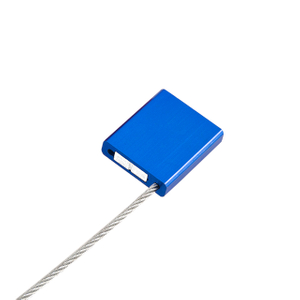
Aluminum: It provides high corrosion resistance. It balances cost and durability perfectly. Aluminum surfaces excel at hosting laser-engraved barcodes and company logos.
Steel: It delivers maximum physical toughness. Steel resists blunt force trauma effectively. It typically supports deep physical stamping for serial numbers.
Plastic/ABS Overmolding: Manufacturers often wrap metal bodies in durable plastic. This overmolding provides excellent UV resistance. It also protects delicate laser-etched serial numbers from transit abrasion.
Environmental Tolerances
Extreme weather destroys inferior products. You must consider environmental tolerances during your evaluation. Standard polypropylene (PP) plastic becomes highly brittle at -10°C. A simple hammer tap can shatter a frozen plastic lock. Metal options maintain their operational stability across extreme temperature ranges. They survive blistering desert heat and freezing arctic shipping routes. Always prioritize metal alloys or specialized ABS blends for global transit.
Navigating Compliance: ISO 17712 and C-TPAT Requirements
The Regulatory Baseline
Cross-border logistics demand strict regulatory adherence. You cannot afford compliance failures at international borders. Using non-certified hardware results in immediate customs delays. Authorities will flag your containers for manual inspection. This triggers severe compliance fines and disrupts your supply chain schedule. You must treat certification as a mandatory procurement filter. A certified high security cable seal acts as your passport through global customs checkpoints.
Understanding the "H" (High Security) Rating
The ISO 17712 standard classifies devices into different security tiers. You must aim for the "H" classification. This rating indicates a high security device. Achieving this rating requires rigorous third-party testing. Independent laboratories push the hardware to its absolute breaking point. They test tensile strength, shear resistance, bending flexibility, and impact endurance. Typically, a product requires a cable diameter of at least 5mm to pass these brutal tests. Anything thinner usually fails the shear test phase.
Audit Readiness
Your security program must remain audit-ready at all times. Regulatory bodies require proof of compliance. Discuss manufacturing certifications openly before purchasing. You need the ability to trace specific batch testing data. Reputable manufacturers provide compliance certificates upon request. They maintain detailed logs of their metallurgical testing. You rely on these documents during sudden compliance audits. Flawless documentation proves your commitment to international cargo security frameworks.
Operational Implementation and Lifecycle Risk Management
The Risk of Over-Sizing
Improper sizing creates massive security vulnerabilities. We strongly warn against ordering excessively long cables. Many operators buy long sizes hoping for universal application. This is a common mistake. Excess slack provides physical leverage for thieves. Attackers use this extra room to twist the wire forcefully. They can also slip massive bolt cutters into the loose gap. You should measure your locking latches carefully. Order lengths that leave minimal slack once engaged tightly.
Standardized Application (The VVTT Protocol)
Human error compromises the best hardware. You must enforce strict field-testing procedures. Supply chain security experts mandate the VVTT protocol. Train your dock workers to execute these four steps every time.
Verify: Match the engraved serial number directly to the shipping manifest. Ensure the numbers align perfectly before application.
View: Inspect the lock body and the braided wire thoroughly. Look for signs of pre-tampering, deep scratches, or glue residue.
Tug: Pull the wire firmly immediately after insertion. This forceful tug tests the internal mechanical engagement of the steel ball.
Twist: Rotate the locked seal vigorously. You must ensure no one can unscrew or manipulate the housing.
Secure Removal and Disposal
Security protocols do not end at the receiving dock. Proper removal requires specialized tools. You must supply your teams with high-quality bypass shears. Standard wire snips will only damage the tool and frustrate the worker. Furthermore, you must mandate strict disposal protocols. Insider threat actors often scavenge discarded locks. They reuse intact housings for sophisticated theft schemes. Instruct your teams to smash the lock body with a hammer. Alternatively, they must deface the serial number completely using a grinding tool.
Shortlisting Your Vendor and Next Steps
Traceability Customization
Your vendor must support your digital tracking infrastructure. Evaluate their ability to provide advanced traceability features. You need unique, non-repeating serialization across every batch. Request high-contrast 2D barcodes for easy digital scanning. Manual data entry causes transcription errors constantly. Barcodes eliminate this human error completely. You should also look for counterpart labeling options. These tear-off labels attach directly to your shipping paperwork. They ensure the physical cargo matches the administrative records flawlessly.
Supply Chain Integration
Assess your supplier's operational capabilities thoroughly. They must align with your specific logistical demands. Evaluate the following elements during your vendor selection process:
Lead Times: Ensure they can meet your seasonal volume spikes without sacrificing quality.
Custom Length Capabilities: Check if they produce lengths up to 2 meters. You may need these for specialized rail cars or oversized industrial valves.
Quality Assurance Consistency: Review their internal rejection rates. You must reject any vendor if a single batch contains locks you can remove non-destructively.
Actionable Next Step
You have the data. Now you must take action. We recommend initiating a controlled pilot test soon. Select a shortlist of fully ISO-certified suppliers. Order sample batches to evaluate their performance in real-world conditions. Check the locking mechanism smoothness during cold morning shifts. Evaluate the barcode readability under harsh warehouse lighting. Assess the specific cutting tool requirements for your receiving docks. This practical testing ensures you select the perfect security partner.
Conclusion
There is no universal security device on the market today. Different transit routes require different defensive strategies. However, a properly specified Cable Seals offers the most reliable balance available. It delivers uncompromising physical defense alongside undeniable tamper evidence. It guarantees global regulatory compliance effortlessly. You should audit your current cargo risk levels this week. Identify the high-value routes demanding upgraded protection. Contact a certified manufacturer promptly. Request their technical data sheets and ISO compliance certificates. Secure your supply chain before the next threat arises.
FAQ
Q: What is the minimum cable thickness required for international shipping?
A: International shipping strictly requires a minimum thickness of 5mm. This diameter is mandatory to achieve the ISO 17712 "H" (High Security) rating. It also satisfies C-TPAT compliance regulations. Thinner wires generally fail the rigorous shear and impact tests required by customs authorities globally.
Q: Can a cut cable seal be re-glued or re-inserted?
A: No, it cannot. Manufacturers utilize non-preformed galvanized steel. When severed, the individual wire strands instantly unravel and fray outward. This makes re-threading the wire into the one-way internal locking mechanism physically impossible. The design guarantees clear, undeniable evidence of any tampering attempt.
Q: What tools do receiving docks need to remove high security cable seals?
A: Standard scissors or basic tin snips will not work. Receiving docks require heavy-duty industrial cable cutters or specialized bypass shears. The specific tool size depends on the wire diameter. For 5mm compliance-rated locks, workers need long-handled cutters to generate sufficient leveraging force safely.