- Home
-
- Industries
-

Innovation And Challenges Of Cable Seals: How To Cope With Harsh Conditions
Views: 0 Author: Site Editor Publish Time: 2026-06-08 Origin: Site


Operating in extreme industrial, marine, or high-risk logistical environments means components are pushed to their failure points. For critical infrastructure and high-value transport, Cable Seals act as the final line of defense. They protect against severe environmental ingress. They also deter malicious tampering.
Standard sealing solutions rapidly degrade under aggressive chemical exposure. Deep-sea pressure and heavy industrial vibration destroy basic polymers. Navigating modern procurement requires understanding precise environmental failure thresholds. You must match these stressors against emerging material and digital innovations.
This guide breaks down the engineering challenges of extreme environments. It outlines technological innovations mitigating these risks. It also provides a strict evaluation framework. You will learn how to shortlist a resilient, compliance-ready cable security seal for your exact operational needs.
Key Takeaways
Assess Failure Modes First: Standard seals frequently fail in extreme environments due to Rapid Gas Decompression (RGD), thermal degradation, and mechanical shear.
Material Science is the Differentiator: Evaluating advanced compounds—such as 316L marine-grade stainless steel, PEEK, and FKM (fluoroelastomers)—is critical for survival in High-Pressure, High-Temperature (HPHT) or corrosive settings.
Innovation Goes Beyond Physical Locking: Modern cable seals integrate self-unravelling galvanized wire for absolute tamper evidence and smart sensors for real-time chain-of-custody audits.
Demand Rigorous Validation: Never baseline procurement on standard spec sheets; require vendor proof of Hipot testing, thermal cycling, and stringent IP ratings.
The High Cost of Failure: Defining "Harsh Conditions" for Cable Seals
Understanding operational risks requires clearly defining extreme environments. Procurement teams often underestimate the physical toll these environments extract. When components fail, businesses face catastrophic safety hazards and massive financial losses.
High-Pressure, High-Temperature (HPHT) Extremes
Engineers define HPHT environments by strict thresholds. Pressures often exceed 10,000 psi. Temperatures frequently rise above 150°C. You will find these conditions in deep-well oil drilling and high-pressure pumping operations. When a component fails here, it leads to catastrophic fluid leaks. Unplanned downtime in a drilling operation costs hundreds of thousands of dollars daily. Safety hazards multiply rapidly when pressurized fluids escape containment.
Corrosive Marine and Chemical Environments
Marine operations expose equipment to continuous deep-water salinity. Industrial zones subject hardware to heavy acids and alkalis. This continuous chemical exposure carries hidden operational costs. Accelerated oxidation eats away at standard metals. Material embrittlement causes rigid plastics to shatter under minimal force. These environments demand highly specialized barrier protections.
High-Vibration and Mechanical Stress
Heavy industrial zones introduce continuous mechanical stress. Long-haul freight logistics create relentless vibration. Over thousands of miles, this vibration causes micro-fractures in standard locking bodies. Stress fatigue weakens the internal locking mechanism. Eventually, the lock snaps. This breakage destroys the chain of custody and leaves cargo vulnerable to undetected tampering.
The Big Data and Sensing Challenge
Advanced applications now rely on distributed fiber optic sensing. Submarine cables transmit multi-million-dollar sensor network data. In these networks, microscopic barrier failures distort high-fidelity data transmission. Moisture alters the refractive properties of fiber optics. A compromised barrier renders the entire data network unreliable.
Common Mistakes in Extreme Environments:
Treating all waterproof ratings equally without checking submersible depth limits.
Ignoring the impact of rapid temperature shifts on polymer flexibility.
Assuming basic stainless steel prevents rust in high-salinity ocean waters.
Why Legacy Seals Fail: Understanding Mechanical Breakdown
Legacy components fail because their baseline materials cannot handle complex physical stress. Demonstrating expertise requires understanding exact failure mechanisms. You must know why parts break down before you can select better alternatives.
Thermal Degradation and Embrittlement
Fluctuating extreme temperatures destroy standard polymers. As heat rises, the polymer chains break down. When temperatures drop rapidly, the material loses its elasticity. It becomes brittle and cracks. Once cracked, the component permanently fails to maintain an airtight or watertight barrier.
Rapid Gas Decompression (RGD)
RGD represents a highly destructive mechanical failure. Pressurized gas slowly permeates the polymer body over time. When operators depressurize the system, the trapped gas expands rapidly. Because the gas cannot escape the dense material fast enough, it literally tears the seal apart from the inside. This results in massive structural blistering and immediate failure.
Chemical Swelling and Softening
Inappropriate material selection leads to catastrophic volume expansion. Using standard rubbers in petrochemical zones causes immediate problems. The rubber absorbs the hydrocarbons. It swells, softens, and extrudes through microscopic gaps under pressure. The barrier disintegrates entirely.
Defeated Tamper Evidence
Low-quality locking mechanisms offer a false sense of security. Bad actors can bypass basic metal clips. They can temporarily remove the wire and reinsert it. This manipulation leaves no definitive, irreversible physical trace. Your security audit becomes meaningless if physical breaches remain hidden.
Failure Modes Summary Table
Failure Mode
Primary Cause
Visible Result
Thermal Embrittlement
Extreme cold/heat cycles
Shattered locking bodies, micro-cracks
Rapid Gas Decompression
Sudden pressure drops
Internal blistering, torn elastomers
Chemical Swelling
Hydrocarbon/acid exposure
Extrusion, melted appearance
Defeated Locks
Weak internal tension
Re-threaded wires without marks
Technological Innovations Driving Modern Cable Seals
Manufacturers now engineer highly advanced solutions to combat harsh physical environments. They combine cutting-edge material science with intelligent digital integration. These innovations transform a basic consumable into a sophisticated security asset.
Advanced Material Architectures
Modern engineering dictates strict material selection for different threat vectors.
Metals: Manufacturers transition to high-tensile aluminum. They utilize ultra-low carbon 316L stainless steel. The "L" stands for low carbon, which provides superior weld-decay resistance. It prevents corrosion in extreme marine environments. These metals offer exceptionally high melting points.
Polymers: Engineers deploy PEEK (Polyetheretherketone) backup rings. They utilize FKM (fluoroelastomers). These compounds close extrusion gaps securely. They survive direct exposure to caustic chemicals without swelling.
Irreversible Tamper-Evident Mechanics
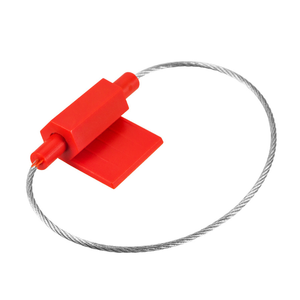
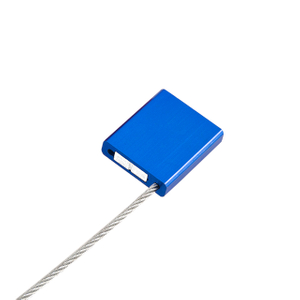
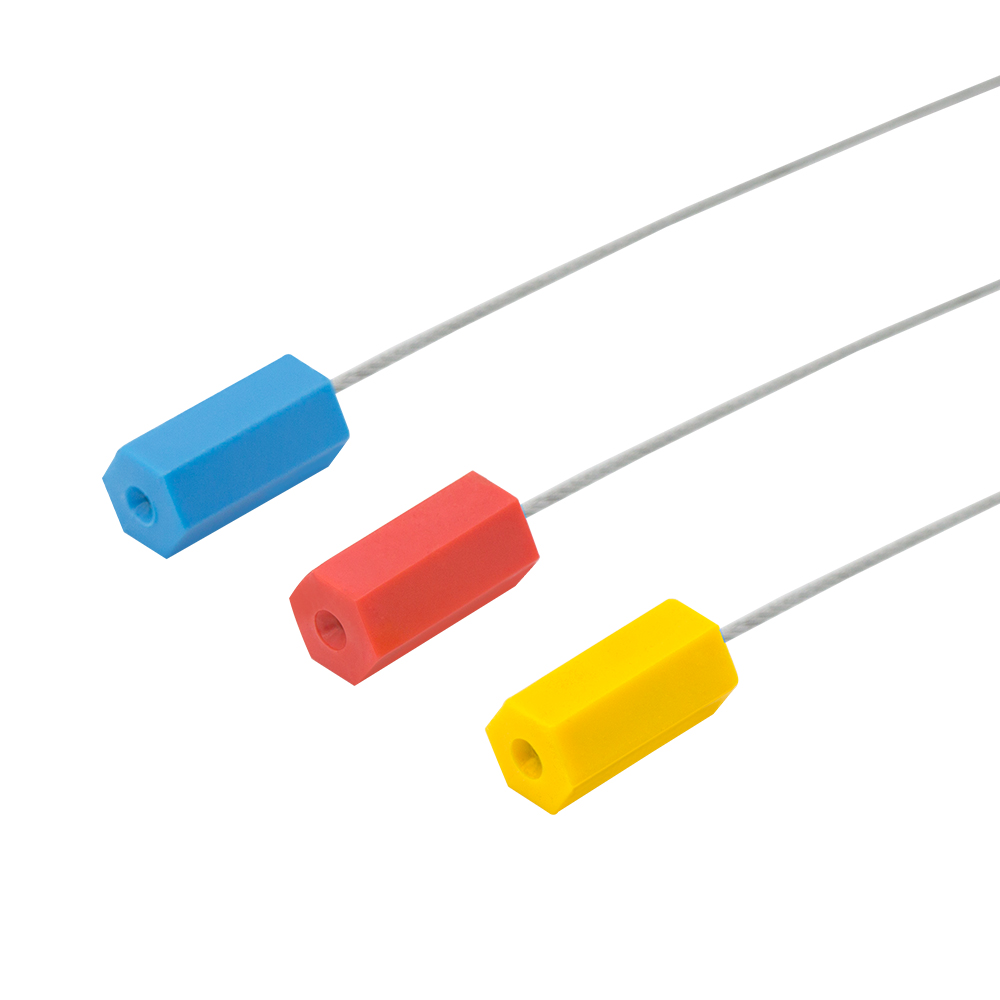
Engineering innovations now guarantee absolute physical security. Premium Cable Seals utilize specialized galvanized wire. When someone cuts this wire, it inherently unravels and frays. This structural innovation serves a vital purpose. It guarantees a compromised wire cannot be re-threaded or disguised. The security breach becomes instantly visible.
Smart and Adaptive Sealing
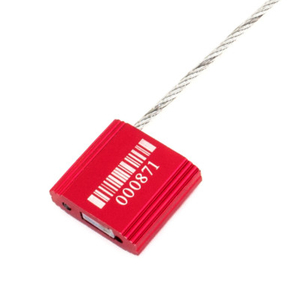
Digital integration elevates basic physical protection. We see the rise of self-healing materials adapting to micro-cracks. Furthermore, IoT-enabled locks offer real-time temperature monitoring. They create digital audit trails via integrated barcodes or embedded RFID chips. Supply chain managers scan them to update cloud databases instantly.
Modular and Flat Cable Adaptability
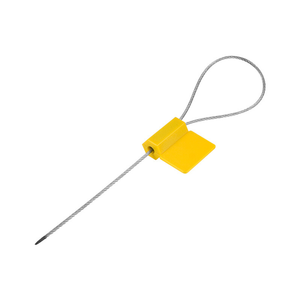
Design geometry innovations simplify installation. A single locking system now adapts to multiple wire diameters. They securely fit irregular flat cables. This modularity reduces inventory overhead for large logistics firms. Maintenance teams carry fewer parts, simplifying the installation process in the field.
A 5-Step Evaluation Framework for Shortlisting Cable Seals
Actionable procurement requires a rigorous evaluation methodology. You cannot rely on generic datasheets. Use this five-step framework to shortlist the exact components your operation demands.
Map the Environmental Baseline: Define your specific threat vectors before looking at products. Do you require resistance to dynamic outdoor UV exposure? Do you face heavy mechanical shock? Pinpoint the exact extremes your equipment will endure.
Align Material Specs with the Threat: Match the chemistry to the environment. Select PA12 (Polyamide 12) for dynamic outdoor UV exposure. Choose 316L stainless steel for marine engine rooms. Specify customized composite locks for acid-heavy industrial zones.
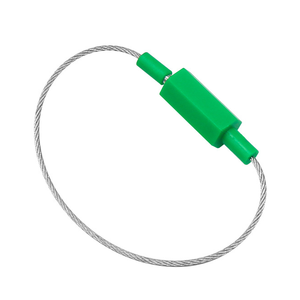
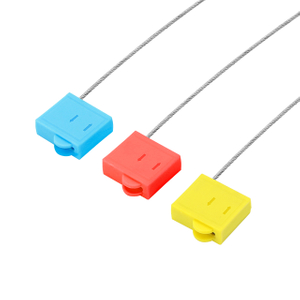
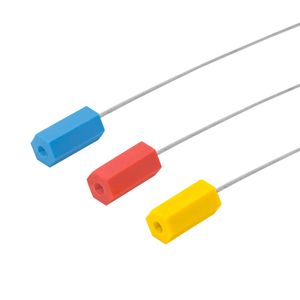
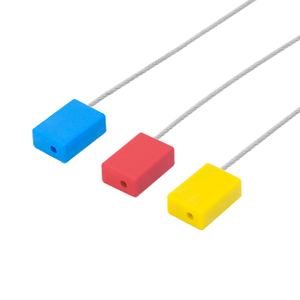
Define Audit and Tracking Requirements: Assess your chain-of-custody compliance needs. Some operations require basic color-coding for rapid visual inspection. High-risk logistics require serialized, scan-ready tracking. Decide if you need RFID capabilities for automated gate checks.
Verify Dimensional Compatibility: Ensure the mechanism accommodates your specific shape requirements. Note whether your cables are round or flat. Check the exact diameter. Ensure the routing constraints do not induce pinch points or severe friction wear.
Balance Security Constraints with Budget Viability: Weigh the cost of an over-engineered smart lock against the acceptable risk profile. A pharmaceutical shipment demands IoT tracking. A domestic lumber shipment might only need galvanized fraying wire. Target the exact intersection of necessary compliance and operational budget constraints.
Best Practice: Always involve field engineers during Step 2. They possess first-hand experience regarding how certain materials behave in your specific facilities.
Validating Reliability: Required Testing and Compliance
Risk mitigation relies on transparent manufacturer data. Never accept standard marketing claims. You must vet vendors thoroughly and demand rigorous validation protocols.
Mandate Factory Validation
Require extensive documentation from the manufacturer. Ask for continuous electrical testing data. Demand High Potential (Hipot) testing results to verify insulation integrity. You must also request strict Ingress Protection (IP) verification. An IP68 rating proves the unit survives continuous submersion under pressure.
Stress Testing for the Real World
Evaluate vendor data regarding environmental stress. Request thermal cycling reports showing rapid shifts from freezing to boiling. Analyze prolonged vibration table testing results. These tests prove the internal locking mechanism will not shatter during heavy rail transport or turbulent ocean voyages.
Third-Party Industry Certifications
Ensure your shortlisted cable security seal meets recognized regulatory standards. Do not rely solely on internal factory data. Look for UL ratings confirming strict flammability standards. For offshore use, mandate certifications from maritime bodies like DNV GL or Lloyd's Register. These third-party stamps guarantee the product survives extreme field deployment.
Essential Validation Testing Standards Chart
Test Category
Testing Standard / Method
What It Proves
Electrical Safety
Hipot (High Potential) Test
Ensures dielectric strength and insulation integrity.
Ingress Protection
IP67 / IP68 Verification
Validates resistance to fine dust and pressurized water.
Thermal Resilience
Rapid Thermal Cycling
Confirms polymers resist embrittlement and cracking.
Maritime Compliance
DNV GL / Lloyd's Register
Approves components for aggressive offshore conditions.
Conclusion
Sourcing components for harsh environments is not a commodity purchase. It represents a critical risk-management decision. Failing to account for variables like RGD, chemical swelling, or vibration fatigue inevitably leads to massive operational disruption. It also triggers severe security breaches in logistics networks.
Procurement and engineering teams must move away from generic specifications. Your specific environmental stressors dictate the materials you need.
Audit your operational environment thoroughly to identify primary threat vectors.
Utilize the 5-step evaluation framework to filter out inadequate polymer and metal blends.
Engage only with manufacturers who provide transparent, third-party validated testing data.
Standardize the use of tamper-evident galvanized wires for all high-value logistical routes.
FAQ
Q: What makes a cable security seal tamper-evident?
A: High-quality cable security seals utilize specific wire construction—such as galvanized steel cables that physically fray and unravel when cut. This prevents the wire from being re-inserted into the locking mechanism, ensuring any breach is highly visible and irreversible.
Q: Which seal materials are best for highly corrosive marine environments?
A: For marine applications, 316L stainless steel is preferred due to its extremely low carbon content, which prevents weld-site corrosion. For non-metallic parts, PA12 (Polyamide 12) is highly resistant to saltwater, UV degradation, and chemical exposure.
Q: What is Rapid Gas Decompression (RGD) and how do seals prevent it?
A: RGD occurs when gas under high pressure absorbs into a seal; if the system pressure drops rapidly, the trapped gas expands and tears the seal apart. Seals prevent this by utilizing highly dense, specialized elastomers (like FKM) engineered to resist gas permeation.
Q: Can cable seals be integrated into a digital management system?
A: Yes. Modern intelligent cable seals are frequently equipped with serialized QR codes, barcodes, or embedded RFID/IoT chips. This allows logistics and compliance teams to scan the seal in the field, instantly updating cloud-based audit logs to ensure an unbroken chain of custody.