- Home
-
- Industries
-

The Benefits Of Bolt Seals For Your Valuable Cargo
Views: 0 Author: Site Editor Publish Time: 2026-07-11 Origin: Site


High-value cargo transitions through multiple custodians daily as it moves across the globe. This complex journey creates distinct vulnerabilities where liability becomes difficult to prove if tampering occurs. Criminals actively exploit these blind spots during intermodal transfers and temporary warehouse storage. Shippers often rely on standard indicative seals to secure their freight shipments. While these simple plastic loops show if someone opened a door, they offer zero physical barrier to determined thieves. A quick snap easily defeats them.
Evaluating a robust sealing strategy shifts your supply chain posture from passive monitoring to active deterrence. Upgrading your physical security ensures strictly regulated chain-of-custody management from origin to destination. Properly secured containers force bad actors to look for easier targets elsewhere. You protect your inventory, maintain your delivery schedules, and avoid costly insurance disputes by implementing specialized locking mechanisms.
Key Takeaways
Bolt seals provide a dual function: high-grade physical security and definitive tamper evidence.
Adopting ISO 17712:2013 compliant seals is critical for regulatory alignment (e.g., C-TPAT) and international border clearances.
Selecting the right truck bolt seal involves balancing physical strength (pull/shear loads) with operational realities (removal tools and driver protocols).
Implementation requires standardizing logging procedures to ensure unbroken liability protection from origin to destination.
The Business Case: Why High-Value Cargo Demands More Than Plastic
Securing valuable freight requires more than a mere visual indicator. Companies shipping electronics, pharmaceuticals, or luxury goods face severe financial consequences when inventory goes missing. We must examine the stark differences between passive indicators and robust physical barriers.
The Cost of Cargo Shrinkage
Cargo shrinkage inflicts massive financial damage on global supply chains. Pilferage does not just mean lost inventory. You must also factor in delayed deliveries, dissatisfied customers, and disrupted manufacturing schedules. Frequent theft incidents cause your insurance premiums to skyrocket over time. A single compromised container can trigger rigorous audits from retail partners. In industries involving food or pharmaceuticals, a broken indicative seal often mandates the destruction of the entire load due to contamination risks. Active deterrence minimizes these catastrophic financial blows.
Barrier vs. Indicative Security
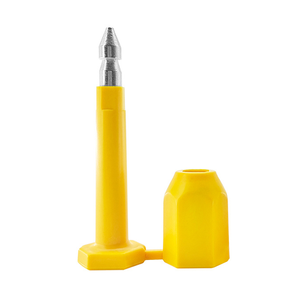
Supply chain security devices fall into two main categories: indicative and barrier. Plastic tags act as indicative security. They break easily and merely tell you a breach occurred. Conversely, a Bolt Seal functions as barrier security. While no device is entirely theft-proof, barrier seals require heavy-duty tools to defeat. Thieves typically need 36-inch industrial bolt cutters to cut through the hardened steel pin. This requirement effectively deters crimes of opportunity. Most cargo thieves seek quick, silent entry. Forcing them to use large, conspicuous tools significantly increases their risk of detection.
Liability Allocation
Chain-of-custody documentation relies heavily on physical evidence. An intact, uniquely numbered locking device shifts liability away from the shipper. When a driver signs for a load and verifies the serial number, the carrier assumes full responsibility for the freight. If the container arrives at the destination terminal bearing the exact, unbroken serial number, the carrier successfully discharges their liability. Terminal operators and receivers use this definitive proof to settle shortage claims swiftly. Without this rigid documentation, liability arguments between shippers, carriers, and consignees can drag on for months.
Core Evaluation Dimensions: What Makes a Bolt Seal Effective
Not all security devices offer the same level of protection. You must evaluate the engineering, design, and materials used in their construction. High-quality devices incorporate several sophisticated features to thwart manipulation attempts.
Anti-Spin Mechanisms
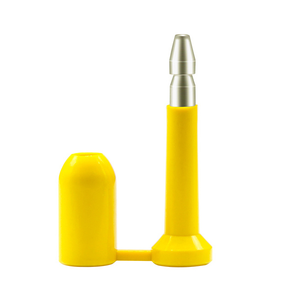
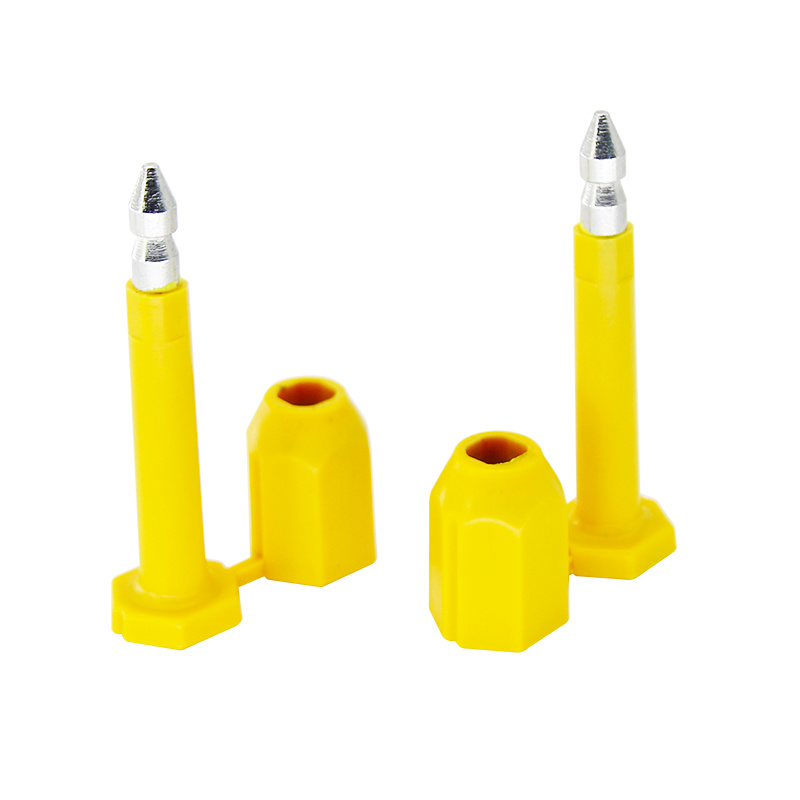
Thieves constantly develop new methods to bypass locking mechanisms. One common attack involves rapidly spinning the pin inside the barrel. This high-speed rotation generates intense friction, eventually melting the internal locking ring or friction-welding the components together. Modern engineering solves this problem using anti-spin mechanisms. Designers mold interlocking shapes—often hexagonal or square—into the plastic coating of the pin base and the barrel. When snapped together, these shapes interlock securely. They physically prevent the pin and barrel from rotating independently, rendering spin attacks useless.
Tamper-Evident Engineering
Sophisticated cargo thieves sometimes attempt partial replacements. They might cut the pin, open the doors, and then glue a counterfeit pin into the original barrel. Tamper-evident engineering stops this practice. Manufacturers permanently laser-engrave identical serial numbers onto both the pin and the locking barrel. Receiving docks must verify both numbers match upon arrival. This dual-numbering system prevents bad actors from swapping components. Furthermore, the locking mechanisms sit deep inside the barrel, preventing thieves from shimmying the lock open using thin metal slips.
Material Integrity
The physical composition of the device determines its resilience. Industry-leading models utilize high-carbon steel pins for maximum shear strength. Manufacturers wrap this rigid steel core in high-visibility, impact-resistant ABS (Acrylonitrile Butadiene Styrene) plastic. This specific plastic serves a crucial security function. ABS plastic exhibits "blushing" behavior when stressed. If someone strikes it, bends it, or applies harsh chemical solvents, the plastic turns permanently white at the stress point. This discoloration immediately reveals any signs of physical tampering or solvent application to the receiving crew.
Best Practice: Always inspect the plastic casing for small stress fractures or white discoloration before cutting the pin.
Common Mistake: Failing to document the serial numbers of both the pin and barrel on the Bill of Lading (BOL).
Navigating Compliance: ISO 17712 and C-TPAT Standards
International shipping demands strict adherence to global security protocols. Selecting uncertified locking devices can stall your freight at borders and invite intense customs scrutiny. Understanding certification standards ensures smooth international transit.
The "H" (High Security) Classification
The International Organization for Standardization (ISO) established the 17712:2013 standard for mechanical freight security. To achieve the coveted "H" (High Security) classification, a device must pass four brutal laboratory tests. Independent testing facilities measure tensile strength to see how much pulling force it withstands before breaking. They test shear strength by applying cutting pressure. Bending strength evaluates resistance to severe torque. Finally, impact strength tests performance under sudden, heavy blows at various temperatures. Achieving the "H" rating guarantees the device serves as a formidable physical barrier.
ISO 17712:2013 Laboratory Testing Standards Overview
Test Category
Description of Force Applied
"H" Rating Minimum Requirement
Tensile Strength
Direct pulling force separating pin and barrel
Must withstand over 10.0 kN (approx. 1,000 kg)
Shear Strength
Cutting force applied directly to the steel shaft
Must withstand over 3.43 kN of cutting force
Bending Strength
Force applied to bend the shaft repeatedly
Must resist over 50 Nm of bending moment
Impact Strength
Sudden kinetic strikes at room and freezing temps
Must survive 40.68 Joules of impact energy
C-TPAT Requirements
The Customs-Trade Partnership Against Terrorism (C-TPAT) program heavily influences North American supply chains. U.S. Customs and Border Protection mandates the use of ISO 17712 "H" class seals for all maritime containers and cross-border truck trailers entering the United States. Utilizing compliant devices allows you to utilize fast-track border lanes and reduces the likelihood of invasive container inspections. Non-compliance results in severe customs delays, hefty fines, or complete container quarantine at the port of entry.
Audit Readiness
Standardizing around certified devices simplifies your internal security audits and insurance claims. Insurance providers recognize the ISO standard as demonstrating a reasonable standard of care. If theft occurs despite using an "H" rated device, you can easily prove you took adequate precautions. This documentation speeds up the claims process significantly. It also satisfies security auditors who review your supply chain protocols during annual risk assessments.
Selecting the Right Truck Bolt Seal for Your Fleet
Procuring security devices requires matching the hardware to your specific operational environment. A one-size-fits-all approach often leads to fitment issues and frustrated warehouse staff. You must evaluate clearance, customized tracking needs, and application suitability.
Application Matching
Domestic overland freight generally operates differently than international intermodal shipping. Intermodal containers transition between ships, trains, and chassis, enduring heavy vibration and harsh marine environments. These applications demand maximum corrosion resistance and durability. Domestic routes may prioritize fast application and removal at regional distribution centers. You should align your purchasing decisions with the specific rigors of your primary freight lanes.
Clearance and Fit
Physical fit matters immensely. Container hasps and trailer door latches vary widely in size and alignment. A proper truck bolt seal must slip through the locking holes smoothly but snap together tightly. If the exposed pin shaft is too long, it creates excessive play. This extra space allows thieves to insert pry bars or wedge heavy cutting tools into the gap. You should select a pin length providing a snug fit against the hasp. This close clearance physically blocks tools from gripping the steel shaft, drastically increasing the difficulty of unauthorized removal.
Customization and Identification
Modern supply chains run on data. Manual serial number transcription causes errors. To combat this, you should evaluate customization options. Laser engraving allows you to add company logos, deterring internal theft of the devices themselves. High-contrast barcodes or QR codes enable automated scanning. Warehouse personnel can simply scan the barrel using handheld devices, immediately integrating the security data into your Warehouse Management System (WMS). This automation eliminates keystroke errors and accelerates the gate-out process.
Customization Options Comparison Matrix
Feature
Primary Benefit
Best Use Case
Standard Serial Only
Cost-effective baseline security
Low-volume shippers using manual logging
Company Logo Engraving
Prevents substitution with generic alternatives
Dedicated private fleets and high-risk cargo
1D / 2D Barcodes
Speeds up gate processing, removes manual entry errors
High-volume distribution centers with WMS
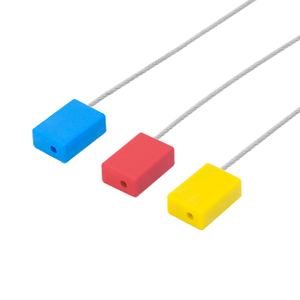
Color Coding
Visual identification of freight types or routing
Multi-terminal consolidation operations
Implementation Realities: Driver Adoption and Process Rollout
Buying superior hardware solves only half the problem. Supply chain security ultimately depends on human execution. If warehouse workers apply devices incorrectly, or drivers fail to check them, the system collapses. You must build robust procedures guiding the human element.
The Driver Perspective
Drivers often view high-security devices as operational friction. Applying them takes slightly more time, and removing them presents a physical challenge. Drivers must carry heavy 36-inch industrial bolt cutters in their cabs. They must also wear safety goggles, as the hardened steel pin can fracture and create flying debris when clipped. You must acknowledge these friction points during rollout. Providing the necessary tools and protective equipment directly to your driver pool ensures higher compliance rates and reduces on-the-job injuries.
Standard Operating Procedures (SOPs)
A rigorous application protocol guarantees the device functions as intended. You should train your loading dock personnel and drivers to follow a strict methodology before dispatching any high-value load.
Inspect the Components: Verify the serial numbers on the pin and barrel match perfectly before application. Check for any pre-existing cracks in the plastic.
Secure the Latch: Insert the pin through the securest hasp on the right-hand trailer door (which opens first).
Engage the Lock: Push the barrel onto the pin until you hear a distinct click.
Execute the "Pull Test": Grab the barrel and pull downward with significant force. This physical test verifies the internal locking ring fully engaged the pin groove.
Document the Application: Take clear photographic evidence showing the locked hasp and the readable serial number. Upload this to the transport management system.
Handling Discrepancies
Drivers and receiving docks need a clear framework for handling anomalies. If a load arrives and the device is broken, missing, or bears mismatched serial numbers, standard unloading must halt immediately. First, the receiver must isolate the trailer in a secure, camera-monitored yard zone. Second, they must document the discrepancy thoroughly with photographs of the doors and any remaining hardware fragments. Finally, they must report the incident to corporate security, the carrier, and the insurance provider before opening the doors. Prompt reporting preserves the crime scene and validates the impending shortage claim.
Conclusion
Transitioning from basic plastic tags to robust barrier security fundamentally upgrades your cargo protection strategy. You actively deter organized theft rings by demanding they use heavy tools in plain sight. Furthermore, implementing ISO-certified hardware ensures your freight flows across international borders without regulatory friction.
To begin upgrading your protocols, you should first audit your current high-value routes to identify vulnerable transit lanes. Next, review your cargo insurance policies to ensure your current locking mechanisms meet their specific compliance requirements. Finally, request sample units from trusted manufacturers. Test these samples on your actual fleet doors to verify clearance, assess barcode readability, and evaluate overall operational fit before committing to a full-scale rollout.
FAQ
Q: What is the difference between a bolt seal and a cable seal?
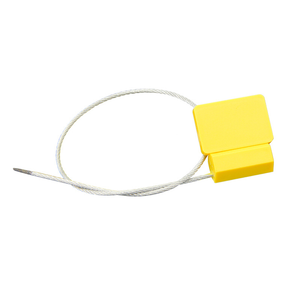
A: A bolt seal provides rigid barrier strength specifically designed for standard container door hasps. It prevents the doors from opening by locking a steel pin inside a barrel. A cable seal offers flexible routing applications. You can thread its adjustable wire rope through misaligned latches, tanker valves, or multiple lock points before pulling it tight.
Q: Can a bolt seal be reused?
A: No. They are single-use, destructible items. To open the container, you must permanently cut the steel pin with industrial cutters. This destruction guarantees chain of custody. If someone could reuse the lock, corrupt actors could open the doors, steal cargo, and reapply the lock without detection.
Q: How do you properly remove a bolt seal?
A: You must use heavy-duty, industrial bolt cutters (typically 24 to 36 inches long) to shear through the steel pin. You should always wear safety goggles and leather gloves during removal. The high-carbon steel can occasionally shatter under extreme pressure, creating dangerous flying metal fragments.
Q: Are bolt seals mandatory for all shipping containers?
A: They are not universally mandatory for local, low-value domestic moves. However, international maritime law, C-TPAT regulations, and specific buyer-carrier contracts frequently mandate them. Any container crossing a U.S. border or traveling via international ocean freight must utilize an ISO 17712 compliant "H" rated device.