- Home
-
- Industries
-

What Are The Advantages of Plastic Seals?
Views: 0 Author: Site Editor Publish Time: 2026-05-04 Origin: Site


Supply chains and high-volume asset networks face a persistent dual challenge. Logistics providers, pharmaceutical companies, and utility managers must prevent undetected tampering. Simultaneously, they must keep operational costs and audit bottlenecks low. We will focus specifically on tamper-evident ties and locks used for chain-of-custody tracking. This guide does not evaluate industrial mechanical sealing components like O-rings or automotive gaskets.
Let us establish a skeptical reality check right upfront. A plastic seal serves as an "indicative" tool rather than a physical barrier. Its primary value lies in rapid auditability. It does not provide brute-force theft prevention. It works best when integrated into a layered security strategy. You achieve optimal results when you pair it alongside IoT sensors, security cameras, or strict access control protocols. Read on to discover how these tools optimize security budgets, compliance, and supply chain tracking.
Key Takeaways
Auditability Over Armor: Plastic seals provide immediate, visual tamper evidence rather than physical theft prevention.
Optimized TCO: At high volumes, plastic solutions drastically lower procurement costs and eliminate the need for specialized application/removal tools, accelerating workflows.
Data Integration: High-contrast laser printing, QR codes, and RFID compatibility turn basic seals into active supply chain tracking nodes.
Scalable Compliance: Customizable tensile strengths and color-coding allow alignment with strict industry regulations (e.g., customs clearance, EN-3 fire safety standards).

Tamper Evidence vs. Physical Defense: The Core Value Proposition
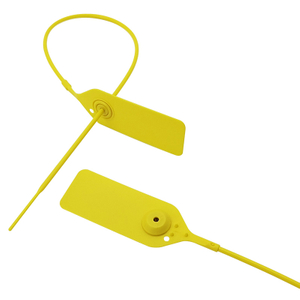
Industry professionals categorize these devices strictly as indicative seals. They exist to fail visibly when compromised. A Plastic Security Seal leaves irreversible evidence of tampering. If an unauthorized person manipulates the lock, the polymer undergoes stress whitening, commonly known as blushing. The locking mechanism may also snap or permanently deform. You cannot reverse or hide this physical damage.
Buyers often fall for the "unbreakable" fallacy. Many mistakenly believe a stronger lock automatically guarantees better security. This assumption misses the true operational advantage. The genuine benefit is rapid visual identification. A compromised shipment becomes immediately identifiable during receiving or auditing. You do not want a seal so strong it hides unauthorized access. You want a seal designed to tell on the thief.
These devices function optimally only within a layered security strategy. They require strict Standard Operating Procedures (SOPs) to deliver real value. Organizations should mandate seal serial number logging at every transit node. Teams must enforce mandatory photographic verification during dispatch and arrival. Combining these visual indicators alongside GPS tracking creates a robust chain of custody. A broken tie signals where and when a breach occurred. This localized data allows you to investigate specific transit legs effectively.
Operational Efficiency and Total Cost of Ownership (TCO)
Industries managing rapid asset turnover rely heavily on high-volume cost efficiency. Tanker truck fleets, daily milk collection farms, and chemical tank wash operations consume hundreds of ties daily. Purchasing metal bolt locks for these high-frequency applications destroys operational budgets. Polymer alternatives offer a drastically lower unit cost. This economic advantage scales powerfully across large logistical networks.
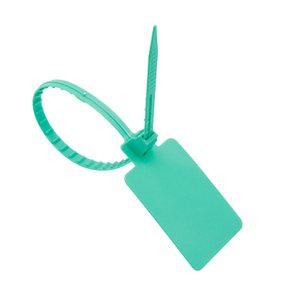
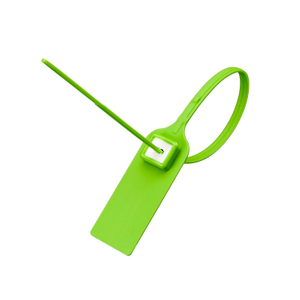
Labor savings further reduce the total cost of ownership. Most models feature a simple "pull-tight" mechanism. This design requires zero specialized tooling for application. Workers simply thread the tail through the locking chamber and pull. They do not need heavy crimping tools or specialized cutters. This tool-free application and removal accelerates processing times at loading docks. Every saved second adds up over thousands of shipments.
You also gain secondary economic benefits. Lightweight materials marginally reduce fuel costs during mass shipping. While a single unit weighs mere grams, thousands of units shipped globally impact overall freight weight. Furthermore, removing sharp metal edges minimizes workplace hazards. Workers handle thousands of packages daily. Soft polymer bands drastically reduce worker injury claims, lowering corporate liability risks.
Advanced Traceability: Barcodes, RFID, and Color Coding
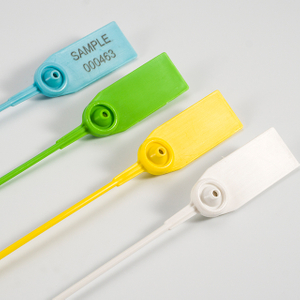
Modern manufacturing utilizes advanced polymer additives to enhance traceability. These additives react chemically during laser marking. They produce fast, high-contrast serialization and barcodes. Traditional ink-stamped numbers often rub off during transit. Laser-marked numbers penetrate the material securely. High-contrast readability prevents scanner misreads in low-light warehouse conditions.
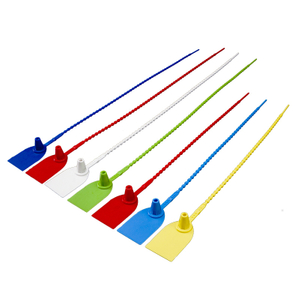
Organizations heavily leverage color-coding as a visual management system. Color systems allow warehouse staff to perform rapid visual triage. Standardizing colors reduces human error during high-stress sorting operations. Here are common color-coding best practices:
Red: Identifies hazardous materials or priority quarantine items.
Blue: Indicates cleaned, sanitized, or empty chemical tanks.
Green: Confirms inspected pharmaceutical products ready for distribution.
Yellow: Flags items requiring secondary quality assurance checks.
Next-generation integration turns a passive lock into a digital checkpoint. Manufacturers now embed RFID chips or QR codes directly into the housing. Automated scanning gantries can read RFID tags instantly as trucks pass through gates. This transition eliminates manual logging errors. It synchronizes physical cargo movement directly into enterprise resource planning (ERP) software.
Customizing Tensile Strength for Industry-Specific Compliance
Different operational environments demand very specific failure thresholds. Engineers customize the break force using a distinct kilogram break matrix. Buyers must specify whether they need emergency release capabilities or strict tool-cut resistance.
Strength Level
Approximate Break Force
Primary Application
Removal Method
Low Strength
~6kg
Fire extinguishers, first-aid kits, crash carts.
Manual snapping (Emergency release).
Medium Strength
~11kg
Logistics totes, retail distribution, utility meters.
Manual twist / Tear-off strip.
High Strength
~25kg+
Heavy-duty transport, cash-in-transit bags.
Cutting tools (Snips or scissors).
Low-strength variants play an essential role in life-safety equipment. Fire extinguishers and first-aid kits require immediate access during crises. These models comply strictly with EN-3 fire safety standards. EN-3 legally requires rapid, manual breakage without tools. Medium-strength models serve standard logistics. They often feature an engineered tear-off strip for controlled, safe manual removal. High-strength models bridge the gap between indicative and barrier security, demanding cutting tools for access.
Properly specified materials also satisfy complex regulatory alignments. Customs agencies worldwide mandate specific tamper-evident features. When shipments arrive at border crossings, officers rely on visual verification. Standardized compliance expedites border clearances. Fast visual audits prevent costly bottlenecks at international ports.
Material Science and ESG Implementation Risks
Industrial applications demand extreme durability in harsh environments. Manufacturers predominantly use Polypropylene (PP) and Nylon. Polypropylene provides excellent resistance to extreme weather and chemical corrosion. It repels moisture and withstands hazardous liquid transport environments. Nylon offers superior tensile strength and handles mechanical stress better. Both materials resist UV exposure, preventing degradation during prolonged outdoor storage.
Corporate buyers increasingly face strong mandates for ESG (Environmental, Social, and Governance) compliance. This pressure drives the transition to recycled plastics. Post-Consumer Recycled (PCR) variants offer a viable path to reduce carbon footprints. Utilizing PCR materials helps organizations meet strict corporate sustainability goals and avoid potential future regulatory penalties.
However, procurement teams must carefully evaluate performance trade-offs. Recycled variants can suffer from tensile strength degradation. Common mistakes involve deploying untested PCR models into freezing environments. Cold weather can make recycled locking mechanisms dangerously brittle. Buyers must rigorously verify temperature stress tolerances. You should always request environmental testing data before adopting PCR solutions across critical supply chains.
Plastic vs. Metal Seals: A Procurement Decision Framework
Choosing the correct material dictates your entire security workflow. Procurement managers must analyze their operational demands objectively. You should choose plastic when your operation involves high-volume daily turnover. It fits perfectly when you require complex barcode or QR printing. It provides the best solution if workers need tool-less removal. It also facilitates strict color-coding systems on a lower per-unit budget.
Conversely, you must choose metal cable or bolt seals under specific mandates. International maritime freight often requires ISO 17712 High-Security certification. Metal fits environments demanding high shear and cut resistance. You choose metal when physically delaying a thief remains your primary goal. Plastic cannot stop an angle grinder or heavy bolt cutters.
We recommend following these shortlisting next steps to finalize your procurement decision:
Audit the Removal Process: Observe your receiving dock. Are workers currently struggling or sustaining injuries removing metal locks?
Calculate Daily Consumption: Map your daily throughput. High daily consumption heavily favors the economic scale of polymers.
Test Barcode Readability: Request sample packs. Test the laser-printed barcodes under your specific warehouse lighting and scanning equipment.
Evaluate Environmental Factors: Subject samples to your actual operating temperatures, especially if you manage cold-chain logistics.
Conclusion
The true strategic fit of an indicative solution lies in information gathering. It tells you exactly if, when, and where a breach occurred. It accomplishes this at a fraction of the cost of physical barrier locks. Rapid auditability protects your supply chain better than brute strength alone.
Procurement teams should avoid purchasing decisions based solely on catalog specifications. We encourage you to request sample packs immediately. Test the locking engagement manually. Verify the tensile strength against your handling procedures. Ensure scanner compatibility directly within your actual operational environment before committing to bulk orders.
FAQ
Q: Can a plastic security seal be reused or bypassed?
A: No. They feature a specialized one-way locking mechanism. Once inserted, the tail cannot reverse. Any attempt to force or bypass the lock causes permanent structural damage. The material will show visible stress blushing or snap completely, leaving clear evidence of tampering.
Q: Are plastic seals compliant with international shipping regulations?
A: They comply with customs requirements for indicative visual auditing. However, they do not meet ISO 17712 High-Security standards. International maritime freight and cross-border container shipping generally require ISO 17712-certified metal bolt seals to withstand extreme physical force.
Q: How do I dispose of used plastic seals?
A: You should cut through the serial number or barcode during removal. Destroying the identifier prevents malicious actors from cloning the tracking data. Afterward, sort them according to their material type (typically Polypropylene or Nylon) and follow your local industrial recycling protocols.