- Home
-
- Industries
-

Why High Security Bolt Seals Are Critical
Views: 0 Author: Site Editor Publish Time: 2026-07-04 Origin: Site


Global supply chains move trillions of dollars in high-value goods every single day. However, these complex logistics networks constantly face escalating risks from organized cargo theft and unauthorized access. Criminals actively target vulnerable shipping routes, seeking quick opportunities to intercept valuable freight. Standard plastic or wire closures only offer basic visual deterrence against these threats. They lack the physical strength required to stop determined intruders. Furthermore, basic plastic ties fail to meet strict customs compliance standards, leaving shipping containers highly vulnerable to tampering, severe regulatory penalties, and significant financial loss.
Upgrading to robust physical barriers is now a mandatory compliance step for international trade. In this article, you will discover how advanced mechanical locking mechanisms function. We will explore why these specific devices remain critical for ensuring frictionless cross-border transit. Finally, we will guide you through strict evaluation criteria and operational best practices to secure your logistics network effectively.
Key Takeaways
Standard seals indicate tampering; high-security bolt seals physically prevent unauthorized access while leaving forensic evidence of tampering.
Utilizing a certified ISO17712 bolt seal is a hard requirement for C-TPAT (Customs-Trade Partnership Against Terrorism) and frictionless cross-border transit.
Procurement decisions must balance physical specifications (shear/pull strength) with operational workflows (custom tracking, correct application, and specialized removal protocols).
Implementing bolt seals requires a structured chain-of-custody logging system; the seal is only as effective as the auditing process behind it.
The Cost of Compromise: Why Standard Solutions Fall Short
Cargo theft heavily damages profit margins and strains customer relationships. Companies must contrast the massive cost of high-value cargo loss against the fractional unit cost of high-security hardware. Losing a shipment worth half a million dollars because a facility saved fifty cents on a plastic tie represents poor risk management. Beyond direct cargo loss, international customs delays cost logistics providers thousands of dollars per day. A single compromised container can trigger comprehensive audits across your entire supply chain, halting operations indefinitely.
Security professionals operate on the deterrence versus delay paradigm. We know no seal is entirely indestructible given enough time and power tools. However, a high-security Bolt Seal introduces massive friction into the theft process. It demands significant time, creates loud noise, and requires specialized heavy tools to bypass. Criminals typically need 36-inch heavy-duty bolt cutters to break the hardened steel pin. This high effort deters opportunistic thieves who rely on speed and silence. They simply move on to easier targets.
Liability and insurance implications also mandate stronger security measures. Many marine and cargo insurance policies explicitly stipulate the use of high-security hardware. If a shipper uses weak plastic ties on a valuable load, insurers may legally reject claims in the event of tampering. By deploying robust hardware, you establish a clear perimeter defense. This validates your insurance claims and demonstrates due diligence to your underwriters.
Decoding the Standard: The ISO17712 Bolt Seal
Navigating international shipping regulations requires a clear understanding of standardized security frameworks. The International Organization for Standardization created a specific framework to govern mechanical freight container seals. We refer to this standard as ISO 17712. It establishes a universal benchmark for security hardware across the globe. By unifying testing procedures, customs agencies worldwide can instantly recognize and trust the security status of an incoming container.
The standard relies on three fundamental pillars of compliance. Manufacturers must satisfy all three elements to achieve certification.
Physical Strength Testing: Independent laboratories subject the hardware to rigorous thresholds. The device must survive extreme impact, shear force, bending stress, and tensile strength tests without failing.
Tamper Evidence: The exterior design must intrinsically show irreversible visual evidence if bypassed or manipulated. Assessors test this by attempting to manipulate the locking mechanism using heat, freezing, or chemical agents.
Manufacturer Audits (Annex A): The facility producing the seal must maintain certified quality management practices. Auditors inspect the factory to ensure production consistency and strict facility security protocols.
These pillars matter deeply for procurement strategies. Buyers must verify the manufacturer's actual independent laboratory certificate. You should never rely on vague "ISO compliant" marketing claims. A product might look tough, but without documented proof, customs officials will reject it. Always request current documentation to prove you are buying a genuine, certified ISO17712 bolt seal before finalizing any purchase order.
Core Mechanics: What Makes a Bolt Seal "High Security"?
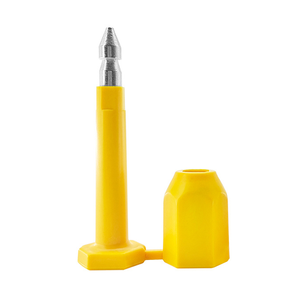
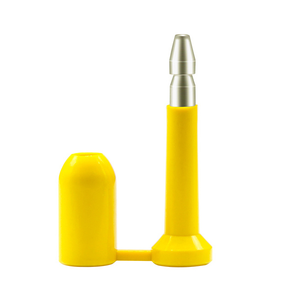
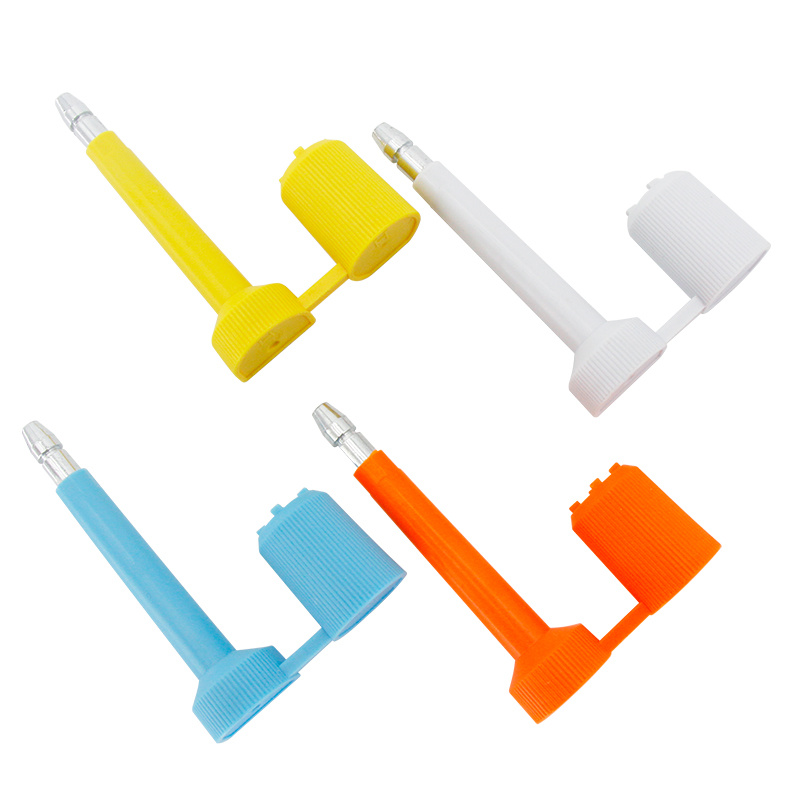
Understanding the anatomy of these devices explains their immense stopping power. Material composition forms the baseline of defense. The standard construction typically features a thick, hardened carbon steel pin. Manufacturers coat this metal core in tough, high-impact ABS plastic. This plastic shell does not simply look professional; it serves a structural security purpose. If criminals attempt to crush or pry the device, the ABS plastic cracks and shatters rather than bending. This shattering provides immediate, undeniable evidence of tampering.
Advanced anti-spin capabilities separate premium hardware from basic designs. Bad actors often attempt to spin the barrel rapidly using power drills. This friction-welds the internal locking mechanism or unscrews older threaded designs. Modern devices feature interlocking shapes built directly into the pin base and the barrel casing. Once engaged, these anti-spin mechanisms completely prevent the barrel from rotating independently of the pin. This forces criminals to use loud cutting tools instead of quiet manipulation.
Tamper-evident features extend beyond the physical materials. Manufacturers laser-engrave matching serial numbers on both the steel pin and the plastic barrel. This prevents a common theft tactic where criminals cut the pin, steal the cargo, and then replace the bottom half of the seal with a counterfeit barrel. When inspectors check the container at the destination, they can quickly verify both numbers. If the numbers do not match perfectly, a breach has occurred. These subtle mechanical features work together to create an exceptionally secure barrier.
Evaluation Framework: Sourcing the Right Bolt Seal
Choosing the correct hardware requires balancing raw strength with daily operational efficiency. You must evaluate specific technical attributes before committing to a vendor.
Critical Technical Specifications
The foundation of your evaluation begins with tensile strength. To qualify strictly as "High Security," the device must possess minimum required load capacities. It should comfortably withstand forces exceeding 1,000 kg (2,204 lbs) of direct pull stress. You also need to verify pin and barrel dimensions. The steel pin must ensure seamless compatibility with standard ISO shipping container latches. The industry standard diameter hovers around 18mm. If you purchase pins that are too thick, dock workers will struggle to insert them into the container doors, causing severe loading delays.
The following Security Hardware Comparison Chart highlights the stark differences between standard plastic ties and robust steel variants.
Feature
Standard Plastic Seal
High Security Bolt Seal
Primary Function
Visual deterrence and basic logging
Physical barrier and severe delay
Material
Polypropylene or Nylon
Hardened Carbon Steel & ABS Plastic
Tensile Strength
Usually under 50 kg
Exceeds 1,000 kg (2,204 lbs)
Customs Recognition
Often rejected for cross-border transit
C-TPAT compliant (ISO 17712)
Removal Method
Scissors or bare hands
36-inch heavy-duty bolt cutters
Customization and Auditing Features
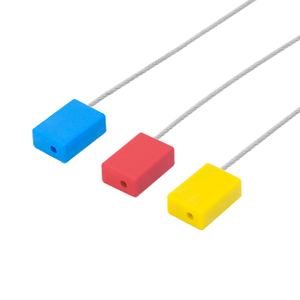
Modern logistics rely on rapid data capture. You must evaluate customization options for sequential numbering and barcoding. Laser-engraved serial numbers resist fading and tampering. Incorporating Code 128 or 2D barcodes allows automated terminal scanners to read the data instantly, eliminating human data entry errors. Color coding also accelerates visual auditing. Assigning distinct colors for different routing lanes, origin points, or cargo classifications helps yard managers identify shipments at a glance.
Optional RFID integration provides the ultimate tracking capability. These specialized units contain passive RFID chips inside the plastic casing. When trucks pass through automated terminal gates, readers instantly log the specific device ID without requiring physical inspection. You must justify the higher unit cost of RFID-enabled units by measuring the time saved at busy receiving docks and automated distribution centers.
Operational Realities: Common Implementation Mistakes
Even the strongest hardware fails if human operators implement it poorly. Supply chain managers frequently encounter vulnerabilities stemming from improper handling and sloppy administrative protocols.
Applying the Seal Incorrectly: Dock workers frequently fail to execute the critical "Pull-Test." After pushing the pin into the barrel, the worker must physically yank the pin hard. This verifies the internal locking ring fully engaged. If they skip this step, the pin might vibrate loose during transit, leaving the container completely unsecured.
Incomplete Chain of Custody: Logging the serial number at the origin point represents only half the job. Vulnerabilities arise when receiving facilities fail to verify both the pin and barrel numbers at the destination. Criminals exploit sloppy checking by altering one half of the unit.
Ignoring Removal Protocols: Removing high-security barriers requires proper equipment. Lacking the appropriate high-leverage bolt cutters (commonly 36-inch minimum) at the receiving dock causes severe operational delays. Furthermore, workers face significant safety risks. Hardened steel can snap under tension. Operators must wear proper safety goggles and heavy gloves during removal to prevent eye injuries from flying metal debris.
Poor Inventory Control: Leaving unassigned hardware unsecured in a warehouse creates massive insider threats. Internal actors can steal a blank unit to cover up future cargo theft. They remove the original unit, steal the goods en route, and apply the stolen unit to trick the receiving dock. Treat unassigned stock with the same security protocols as sensitive keys or cash.
Conclusion
A high-security closure acts as much more than a simple piece of metal and plastic. It serves as the physical anchor of a broader, comprehensive security and compliance protocol. By deploying standardized hardware, you immediately elevate your defense posture, deter opportunistic criminals, and streamline cross-border customs clearances. The minor investment in robust physical security yields massive returns by preventing catastrophic cargo loss.
As you move forward, prioritize vendors who demonstrate absolute transparency. Demand current independent lab reports to verify standard compliance. Evaluate their customizable tracking options and assess their reliable supply chain lead times. Your operations cannot afford delays because a vendor ran out of stock.
Take proactive steps today to secure your network. Request physical samples from your shortlisted suppliers to conduct operational testing at your docks. Ensure your workers can handle the application and removal processes safely. Finally, contact sales representatives to negotiate volume pricing and finalize your compliance verification paperwork. Robust security begins with decisive procurement action.
FAQ
Q: Are all bolt seals automatically ISO 17712 certified?
A: No. A seal must undergo independent laboratory testing for physical strength and tamper evidence, and the manufacturer must pass ongoing facility audits. Always request the laboratory certificate before purchasing.
Q: How do you remove a high-security bolt seal?
A: Due to the hardened steel core, standard wire cutters are insufficient. Removal requires heavy-duty bolt cutters (typically 24 to 36 inches) applied directly to the pin. You must wear proper safety gear, including goggles and gloves, as the metal can snap under tension.
Q: Can a bolt seal be reused?
A: No. By design, high-security bolt seals are single-use. Once the locking mechanism is engaged, it cannot be opened without permanently destroying the seal, which provides the necessary tamper evidence.
Q: What happens if a bolt seal arrives broken or missing?
A: The receiving facility must immediately quarantine the container and document the breach with photographs. You must notify the shipping company and local customs authorities, then conduct a full inventory check before accepting the cargo.