- Home
-
- Industries
-

Understanding the Importance of Plastic Security Seals
Views: 0 Author: Site Editor Publish Time: 2026-09-25 Origin: Site


Every year, supply chain theft bleeds billions of dollars from the global economy. Organized cargo crime grows increasingly sophisticated. Unsecured freight faces constant risks of tampering, pilferage, and contamination. To combat these vulnerabilities, organizations require a reliable frontline defense. This defense must protect brand integrity while ensuring strict regulatory compliance.
While the market offers a myriad of securing materials, one specific polymer stands out as the undisputed industry standard. Investing in a high-quality PP Security Seal provides businesses with a versatile and uncompromisingly reliable solution. In this comprehensive guide, we will explore the intricate mechanics, operational benefits, and critical buying criteria for these devices. Procurement professionals will gain the exact knowledge needed to make smart purchasing decisions.
Key Takeaways
Tamper-Evident Security: Acting as a visual deterrent and an immediate indicator of compromise, these indicative devices protect goods from theft and environmental contamination.
Material Superiority: Polypropylene strikes an optimal balance. It delivers structural flexibility, formidable tensile durability, and extreme cost-effectiveness.
Enhanced Features: Top-tier configurations incorporate stainless steel metal buckles within the locking chamber. This exponentially increases grip strength and neutralizes temperature-based tampering tactics.
Versatile Applications: These devices adapt universally to diverse environments, ranging from securing heavy-duty logistics trucks to safeguarding delicate medical cabinets.
Smart Procurement: Selecting the correct specification demands a careful evaluation of strap length, locking mechanisms, and vital customization variables like scannable barcodes.
What is a Polypropylene Security Seal? Understanding the Material
To truly grasp the efficacy of modern cargo protection, an engineer must first examine the underlying science of the manufacturing materials. A security device is only as reliable as the foundation it is built upon.
The Science of Polypropylene
Polypropylene is a highly versatile thermoplastic polymer widely utilized in demanding industrial applications. Manufacturers specifically select this polymer for its exceptional tensile strength and fatigue resistance. Featuring a semi-crystalline structure, the material can bend, twist, and flex through tight spaces without snapping.
Building on this structural integrity, the polymer also boasts excellent chemical resistance. The seal remains completely stable when exposed to harsh industrial solvents, heavy-duty cleaning agents, and fluctuating environmental moisture levels. Consequently, the strap survives standard transit vibrations and rough dockyard handling. It only breaks when subjected to deliberate destructive force.
How Polypropylene Outperforms Other Plastics
Security hardware can be injection-molded from various plastics. However, polypropylene distinctly outperforms alternatives like Nylon or Polyethylene in indicative applications. Nylon possesses a critical flaw. It absorbs moisture from the environment. Over time, this alters its mechanical properties, rendering it brittle and prone to accidental snapping in dry conditions. Polyethylene is highly flexible but frequently lacks the necessary tensile strength to resist moderate unauthorized pulling forces.
Polypropylene perfectly bridges this gap. It provides superior tamper-evident properties while remaining highly economical for high-volume single-use applications. Once engaged, the specific density of the material ensures that any forced manipulation leaves permanent visible stress marks. This flawlessly fulfills its primary role as an indicative security device.
The Critical Role of Plastic Security Seals in Modern Logistics
The global supply chain relies entirely on maintaining a secure unbroken flow of goods across borders and distribution networks. Plastic indicative seals serve as the foundational mechanism for establishing this essential security baseline.
Preventing Theft and Unauthorized Access
The fundamental purpose of an indicative seal is not to act as an impenetrable physical barrier like a heavy steel padlock. Instead, it deters unauthorized access through guaranteed detection. Most modern plastic seals utilize a pull-tight variable-length mechanism. When a dock worker threads the strap through a latch and inserts it into the locking chamber, internal teeth aggressively grip the material. This creates a secure unidirectional loop.
If a bad actor attempts to pull the strap backward, the internal mechanism simply bites harder. The only way to bypass the defense is to physically cut or snap the strap. This immediate irreversible destruction signals to the receiving party that the cargo compartment has been compromised. It prompts immediate inventory audits.
Industry Trends: The Shift Towards Hybrid Tracking
Recent analyses of global logistics trends reveal a massive surge in sophisticated cargo theft networks. In response, industry leaders are moving away from treating security seals as mere physical locks. The modern trend heavily favors hybrid tracking systems. By leveraging the printable surface area of a plastic PP seal to laser-etch high-contrast QR codes, logistics companies integrate physical tamper evidence directly into cloud-based manifests. When a shipment changes hands, personnel instantly scan the seal via mobile devices. This logs its exact GPS location and physical status into a centralized database. Such integration ensures absolute real-time accountability at every transit node.
Regulatory Compliance and Safety Standards
Beyond theft prevention, multiple commercial sectors are bound by strict regulatory frameworks governing product safety. In the pharmaceutical sector, strict mandates require clinical waste bins and sensitive medications to be irrevocably sealed. This prevents public health hazards. Similarly, the food and beverage industry relies on these devices to comply with rigorous sanitation standards. They ensure raw ingredients remain entirely free from deliberate contamination during transit. Plastic seals provide a standardized highly auditable method for corporations to demonstrate compliance with these non-negotiable safety regulations.
Key Features of a High-Quality Security Seal
For procurement professionals, evaluating product specifications is a critical task. Not all plastic seals offer identical levels of security. Specific engineering choices directly dictate their operational effectiveness in the field.
The Metal Buckle Insert Locking Mechanism
The locking chamber represents the beating heart of any pull-tight seal. Standard low-budget variations often rely on a plastic-only locking mechanism. While functional for low-risk internal storage, plastic teeth harbor a distinct vulnerability. They can sometimes be manipulated using extreme heat to soften the polymer. This allows a thief to carefully pull the strap out and reinsert it later without detection.
Premium seals entirely mitigate this vulnerability by anchoring a stainless steel insert within the locking chamber. This metal buckle features sharp precisely angled teeth that bite deeply into the polypropylene strap upon insertion. Steel does not soften at the same thermal threshold as plastic. Consequently, heat-based tampering tactics are rendered completely ineffective. This inclusion exponentially increases the required pull-strength, guaranteeing that any brute-force attempt will snap the strap long before the lock fails.
Variable Length and Strap Design
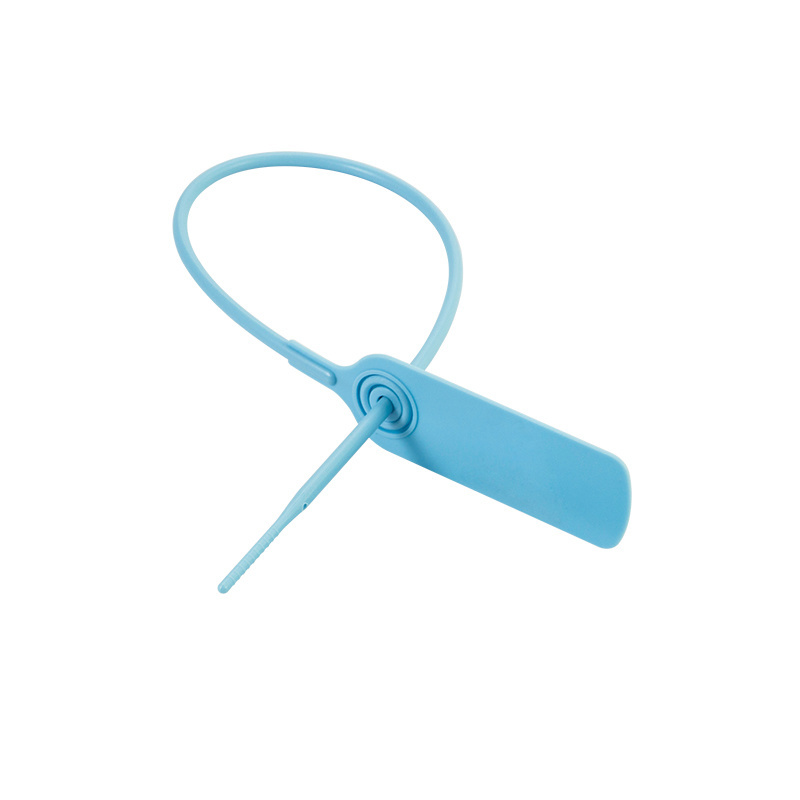
The physical geometry of the strap dictates its versatility across different scenarios. A smooth round strap design is remarkably advantageous. It glides effortlessly through small latches, narrow eyelets, and misaligned locking holes without snagging. Specifically, a 400mm length offers the perfect operational sweet spot. It provides generous slack to loop around bulky tote boxes or wide tanker valves. At the same time, it allows the user to pull it completely taut. This eliminates any excess room that a tamperer might exploit with picking tools.
Customization and Labeling Real Estate
Data visibility is paramount. The flag area situated just above the locking chamber serves as the primary real estate for this data. High-quality variants feature an enlarged perfectly smooth flag designed specifically to accommodate high-contrast laser printing. Unlike standard ink printing which can smear, laser etching burns the data directly into the plastic. Barcodes, company logos, and serial numbers remain crisp and scannable even after enduring harsh UV radiation or severe physical abrasion during cross-country transit.
Common Industries and Applications for Polypropylene Seals
Thanks to the inherent versatility of the pull-tight design, these robust devices are actively deployed across a vast spectrum of commercial and industrial sectors.
Transportation and Freight
In the fast-paced freight industry, seals are rapidly applied to truck rear doors, trailer hasps, and liquid tanker valves. They provide logistics managers with immediate visual confirmation that a cargo compartment has remained sealed since its departure. This effectively shields freight forwarders from costly liability claims regarding missing inventory.
Retail and Cash-in-Transit
Financial institutions and major retail chains depend on these devices to secure cash bags, ATM cassettes, and high-value distribution totes. The implementation of sequential numbering ensures that the exact cash bag dispatched from a secure vault is the identical bag received by the retail branch. This drastically reduces the risk of internal shrinkage.
Healthcare and Pharmaceuticals
Hospitals routinely utilize plastic seals on medical cabinets, emergency crash carts, and hazardous clinical waste bins. Picture a chaotic emergency room. A nurse can quickly snap a plastic seal by hand to access life-saving equipment on a crash cart. Later, that broken seal serves as a clear undeniable alert to hospital administration that the cart requires immediate restocking and a full inventory audit.
Core Comparison: Choosing the Right Security Protocol
When engineering a physical security protocol, organizations inevitably face a choice between different sealing mechanisms. Understanding the distinct operational contexts for each is vital for maximizing efficiency.
Feature
Plastic PP Seals
Metal Cable Seals
Traditional Padlocks
Primary Function
Indicative tamper evidence
Physical barrier and tamper evidence
Reusable physical barrier
Removal Method
Safety scissors or manual snapping
Heavy-duty bolt cutters
Key or combination code
Cost per Unit
Extremely low
Moderate to High
High initial investment
Tracking Capability
Excellent via laser-etched barcodes
Good via engraved serial numbers
Poor lack of unique transit data
Best Use Case
Domestic freight, retail totes, medical carts
International maritime shipping containers
Static facility gates, internal storage rooms
Enterprise logistics involve processing tens of thousands of shipments daily. Procuring heavy metal bolt seals for every minor internal movement generates massive unjustified expenses. By purchasing plastic seals in bulk, organizations significantly slash their operational overhead. Businesses achieve their required baseline of tamper-evident security at a mere fraction of the cost. This allows them to allocate security budgets much more efficiently.
How to Properly Apply and Inspect a Plastic Pull-Tight Seal
Implementing a physical security measure is only effective if the operational procedures surrounding it are executed flawlessly. Even the most advanced tamper-evident devices can be compromised if personnel fail to apply or inspect them correctly. Establishing a standardized operating procedure minimizes human error and maintains an unbroken chain of custody.
Step-by-Step Application Guide
To guarantee maximum security, personnel must follow a systematic standardized approach on the warehouse floor.
First, visually verify the integrity of the seal to ensure it was not damaged during transit. Immediately record the unique serial number, barcode data, and color into the official shipping manifest or digital logistics software.
Next, carefully thread the flexible tail through the designated latch or eyelet. Ensure the pathway is completely clear of debris that might jam the locking mechanism.
Then, insert the tip of the tail into the locking chamber opening. It is critical to enter from the correct side usually marked by an embossed arrow. Reversing this direction will fail to engage the internal teeth.
Finally, pull the tail entirely through the chamber to minimize the loop size. A tighter loop drastically reduces the physical space available for thieves to insert tampering tools. Give the seal a firm sharp tug in the opposite direction to confirm the metal insert has locked onto the plastic.
How to Inspect for Tampering
Receiving personnel must be rigorously trained to spot the subtle tell-tale signs of manipulation. Inspectors should routinely look for specific red flags.
The most common scientific indicator on a polymer seal is stress whitening. When polypropylene is subjected to excessive stretching or violent bending, the molecular structure warps. This causes the plastic to turn visibly white at the stress point. This serves as a permanent irreversible indicator of physical manipulation.
Furthermore, inspectors must physically run their fingers along the entire length of the strap to detect the cut-and-glue method. A thief might cut the strap and meticulously glue it back together. Tactile inspection will reveal rigid spots, unnatural bumps, or sticky adhesive residue. Examine the locking head carefully. Look for melted edges indicative of thermal tampering, or shine a light into the chamber to ensure the internal metal teeth have not been flattened by a probe.
Choosing the Right Specification for Your Business
Procuring the ideal security equipment requires matching the precise specifications of the product to your unique operational environment. Selecting an inadequate seal creates a dangerous illusion of security, while over-specifying wastes valuable capital.
Assessing Your Security Needs
Before finalizing a purchase, enterprise buyers must evaluate several technical criteria. First, analyze the necessary tensile strength. Securing heavy violently shifting cargo doors requires a significantly higher break strength compared to sealing a stationary indoor medical cabinet. Next, account for environmental extremes. While polypropylene thrives in hot and humid climates, prolonged exposure to sub-zero freezing may require specialized material additives. Finally, precisely measure the diameter of the latch holes the seal must pass through to guarantee physical compatibility.
Product Spotlight: The 400mm Round Strap Configuration
When balancing operational versatility, cost-effectiveness, and robust defense, certain configurations distinctly stand out. For organizations seeking a universal highly reliable solution, investing in a 400mm round strap security seal resolves multiple logistical challenges simultaneously.
The 400mm operational length proves incredibly adaptable. It offers ample slack to navigate around awkward industrial valves or oversized tote boxes. Yet, it pulls completely tight for securing small delicate applications. The smooth round strap design prevents the frustrating snagging often associated with flat straps. This accelerates the application process for warehouse staff.
Most importantly, the integration of the stainless steel buckle inside the locking chamber elevates this product from a simple plastic tag to a formidable security device. Once the polymer strap passes through those metal teeth, reversing it is physically impossible without visibly destroying the unit. This hybrid engineering represents the gold standard for enterprise buyers focused on total risk mitigation.
Conclusion
Securing a complex global supply chain is an absolute business imperative. Utilizing the correct physical tools not only prevents catastrophic theft but ensures strict compliance with industry safety regulations. A high-quality polypropylene indicative seal consistently delivers the most reliable cost-effective tamper evidence available on the market.
However, it is crucial to remember that not all seals are created equal. Prioritizing configurations equipped with robust metal locking mechanisms and optimal strap lengths ensures your defenses cannot be easily bypassed. This relatively small procurement investment yields massive peace of mind, protecting your bottom line and your brand reputation. Upgrade your operational security protocols today. To find the exact specifications that match your industry requirements, explore the professional-grade solutions at SD Junyue and ensure your valuable assets remain protected from the moment of origin to their final destination.
FAQ
Can a plastic security seal be reused?
No. These devices are strictly engineered for single-use tamper-evident applications. The internal locking mechanism is entirely irreversible. Once the strap engages with the locking chamber, it cannot be backed out. To access the secured container, the seal must be physically cut or snapped. This permanently destroys it. This deliberate destruction provides immediate undeniable proof that access has occurred.
What is the advantage of a metal buckle in a plastic seal?
A metal buckle typically crafted from stainless steel delivers a significantly stronger and more relentless grip on the plastic strap compared to an all-plastic locking chamber. Plastic teeth can occasionally be compromised by applying extreme heat to soften the material. A metal insert remains structurally rigid across extreme temperature variations. It bites deeply into the polypropylene, drastically increasing the tensile pull strength and rendering the seal highly resistant to sophisticated picking techniques.
How do I choose the right length for my application?
The optimal length is dictated entirely by the physical dimensions of your specific application. You must measure the distance between the securing points and account for the thickness of the hardware. A standard length, such as a 400mm round strap, is widely regarded as the most adaptable option in the logistics sector. It is long enough to secure large transportation doors and bulk containers, yet can be pulled completely tight to secure small retail bags without leaving excess slack.
Can these devices be customized with my company logo?
Yes. Professional-grade seals are manufactured with a designated flat area known as the flag or tag. This space accommodates extensive customization. Utilizing advanced laser printing technology, manufacturers can permanently etch company logos, unique sequential serial numbers, and scannable QR codes directly into the polymer. Laser printing is highly recommended because it makes it impossible for thieves to rub off or alter the identification data without leaving obvious physical scratch marks.
Are polypropylene seals environmentally friendly?
Polypropylene is a widely recognized highly recyclable thermoplastic officially categorized under Recycling Code 5. While the security seals themselves are single-use items, they do not have to end up in landfills. Many environmentally conscious logistics companies implement internal collection programs where used cut seals are gathered and shipped to recycling facilities. There, the plastic is melted down and repurposed into secondary industrial goods.
What is the average breaking strength of a standard PP seal?
The breaking strength heavily depends on the specific design and the presence of a metal insert. Standard all-plastic seals typically offer a breaking strength between 15 to 25 kilograms. However, premium configurations equipped with a stainless steel locking mechanism and a thicker strap diameter can easily withstand pull forces exceeding 35 to 45 kilograms. This provides a much more robust physical deterrent against opportunistic theft.
How does temperature affect the performance of plastic seals?
High-quality polypropylene is engineered to withstand a broad operational temperature range, typically from negative 20 degrees Celsius to positive 80 degrees Celsius. In extreme freezing conditions, standard plastics can become brittle and snap under minor impacts. Conversely, extreme heat can soften inferior plastics. Choosing a seal with a metal locking insert mitigates the heat vulnerability, while specific cold-weather polymer blends are available for deep-freeze logistics applications.