- Home
-
- Industries
-

Why Polypropylene is the preferred material used when manufacturing plastic security seals
Views: 0 Author: Site Editor Publish Time: 2026-09-18 Origin: Site


Polypropylene vs. Nylon vs. ABS: Which Plastic Seal is Better?
For procurement managers and supply chain coordinators, selecting the appropriate polymer for security devices is a critical decision. This choice directly impacts both operational integrity and budget allocation. The market predominantly offers three types of plastics for security applications. These are Polypropylene, Nylon, and Acrylonitrile Butadiene Styrene. Understanding the empirical differences between these materials is essential. You must maximize Return on Investment without compromising asset protection.
Polypropylene vs. Nylon Seals
Engineers often specify Nylon for structural rigidity and high base tensile strength. However, tamper-evident applications demand different properties. When evaluated specifically for single-use security, Nylon presents distinct operational disadvantages. Primarily, Nylon is a highly hygroscopic material. It naturally absorbs moisture from its surrounding environment. In heavily humid conditions like maritime shipping, Nylon becomes overly pliable. This pliability potentially allows a locked mechanism to be manipulated or stretched by a bad actor.
Conversely, extremely dry or sub-zero conditions cause Nylon to lose its internal moisture. It becomes dangerously brittle. A dock worker forcefully pulling a frozen Nylon strap might accidentally snap it before securing the freight. Polypropylene is inherently hydrophobic. It repels moisture. This ensures its physical properties remain remarkably stable across diverse, punishing climates. Nylon is significantly more expensive to produce and source. Choosing a premium PP security seal delivers comparable, weather-resistant security at a fraction of the unit cost.
Polypropylene vs. Acrylonitrile Butadiene Styrene
Acrylonitrile Butadiene Styrene is a dense, hard thermoplastic renowned for its impact resistance. Within the security industry, this material is typically reserved for encasing heavy-duty metal bolt seals used on international shipping containers. While it excels in rigid scenarios, it severely lacks the flexural modulus required for variable-length pull-tight straps.
If a strap were manufactured from this dense material to a standard operational length, it would likely fracture. Bending it sharply around a tight latch, a rusted truck door handle, or a misaligned industrial valve causes immediate micro-fracturing. Polypropylene possesses a much lower flexural modulus. This allows it to bend, loop, and thread through awkward locking mechanisms safely. For any application requiring adjustable, pull-tight security, Polypropylene remains unequivocally the superior material.
Material Comparison Overview
Material
Moisture Resistance
Flexibility
Tamper Evidence Mechanism
Cost Efficiency
Polypropylene
Excellent
High
Immediate stress blushing
High
Nylon
Poor
Medium
Minimal visual change
Low
Acrylonitrile Butadiene Styrene
Good
Low
Fractures under stress
Medium
Global Industry Trends Driving the Shift to Polypropylene
Recent market analyses tracking global freight security indicate a definitive industry shift. Logistics providers are aggressively moving away from traditional, untrackable padlocks. This is driven by the exponential growth of cross-border e-commerce and heightened regulatory scrutiny. The current trend heavily favors single-use, scan-ready plastics that integrate directly into digital inventory software.
Supply chain digitization requires scannable, reliable physical security. Traditional metals are too heavy and costly, while composite plastics fail to meet the dual demand for low cost and high data retention. Polypropylene perfectly bridges this gap. Because of its exceptional cost-to-performance ratio and laser-reactive surface, it has become the foundational material supporting this digital shift across multiple high-stakes sectors.
Customization and Traceability: The Data Benefits of Polypropylene
In the modern logistics ecosystem, a physical barrier is only half the equation. The other half is data. A security seal acts as a critical, scannable data point in the chain of custody. The unique surface density of Polypropylene makes it an exceptional substrate for permanent customization. This enables seamless integration into automated, cloud-based tracking systems.
Superior Laser Engraving Capabilities
Traceability relies entirely on the permanence and legibility of printed information. Smugglers and thieves often use harsh chemical solvents like industrial alcohol or acetone. They attempt to wipe away standard inkjet-printed serial numbers to replace them. Polypropylene effectively neutralizes this threat. It reacts exceptionally well to industrial laser engraving technology.
Furthermore, when a high-powered laser interacts with the polymer matrix, it causes a localized carbonization effect. This process creates dark, high-contrast markings that are physically etched deep into the plastic. Consequently, sequential numbering, custom corporate logos, and complex two-dimensional barcodes remain indelible. They cannot be rubbed off, chemically dissolved, or faded by prolonged ultraviolet exposure. Utilizing a customized tamper-evident PP security seal eliminates dangerous blind spots in supply chain audits.
Color Coding for Logistics Management
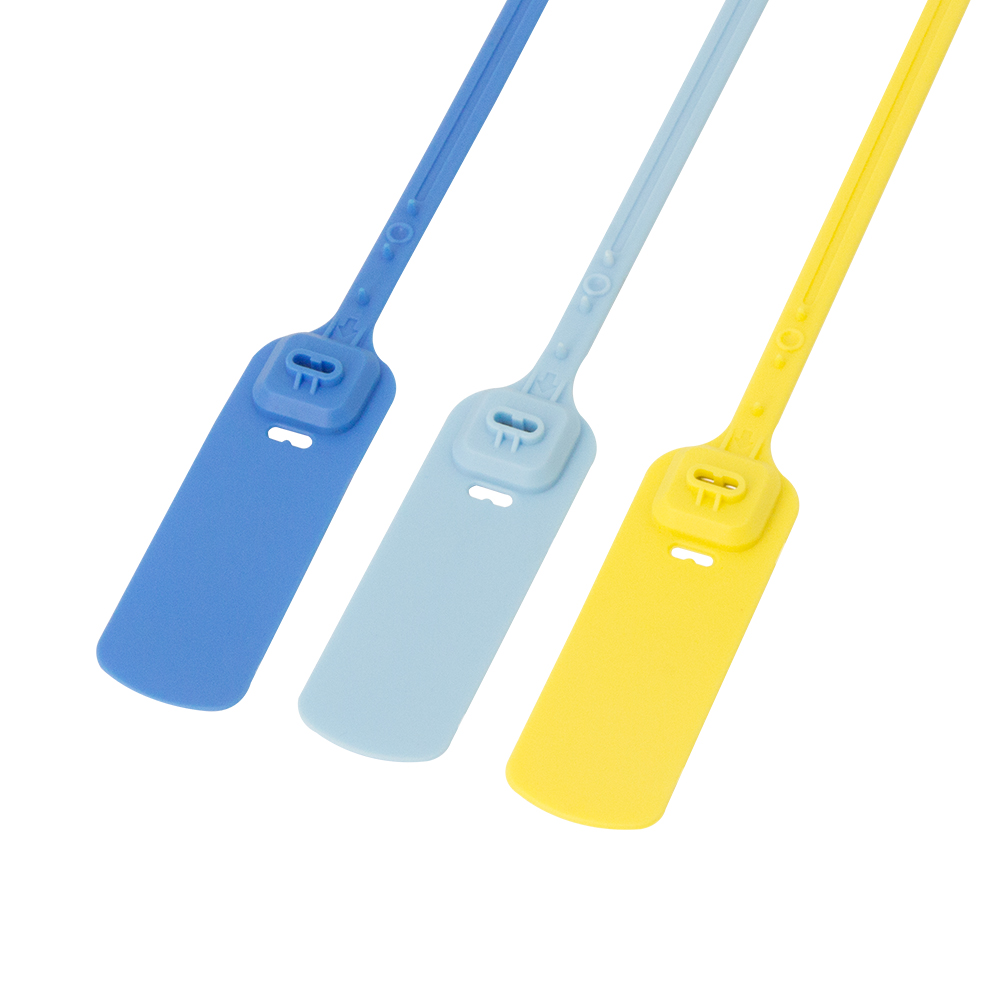
Operational efficiency on a busy loading dock can be significantly enhanced through visual management strategies. Polypropylene is easily dyed during the injection molding process using specialized color masterbatches. This allows manufacturers to produce seals in a wide spectrum of vibrant, uniform colors without degrading the core material tensile strength.
Procurement teams frequently leverage this feature to implement sophisticated visual routing systems. For instance, a distribution center might utilize red seals exclusively for hazardous materials, blue for standard domestic freight, and green for expedited cross-border shipments. Rotating colors by the day of the week allows warehouse managers to instantly identify delayed cargo from a distance. This streamlines inventory management and reduces human error.
Key Industries Relying on Polypropylene Tamper-Evident Seals
The versatility of Polypropylene allows it to meet the strict compliance requirements of various demanding industries. Each sector faces unique physical challenges, but the core need for irreversible tamper evidence remains universal.
Logistics, Shipping, and Transportation
The global freight industry operates under grueling physical conditions. It requires security solutions that can withstand relentless road vibration, physical shock, and extreme weather fluctuations. Polypropylene seals are heavily deployed to secure truck trailer doors, intermodal cargo containers, and internal warehouse roll cages. The flexibility of a variable-length strap allows logistics personnel to thread it through diverse, often rusted latch types quickly. This ensures freight remains untouched during multi-modal transit.
Healthcare and Pharmaceuticals
In the healthcare sector, stringent regulatory compliance and contamination control are absolute priorities. Hospitals, laboratories, and pharmaceutical distributors rely heavily on Polypropylene to secure biohazard medical waste bags, emergency crash carts, and restricted narcotics cabinets. The inherent resistance to harsh cleaning chemicals and sterilization processes ensures the seal remains intact in highly sanitized environments. The immediate visual evidence provided by the material stress blushing alerts nursing staff instantly if a life-saving crash cart has been compromised.
Retail, Banking, and Cash-in-Transit
Financial institutions and massive retail enterprises require uncompromising internal security for asset transfers. These seals are the standard mechanism for locking cash bags, automated teller machine cassettes, and high-value retail distribution totes containing electronics. The ability to laser-engrave non-repeating sequential numbers ensures a strict, unbroken chain of custody. If a specific seal number logged at the central bank vault does not perfectly match the seal number upon arrival at the local retail branch, an internal investigation is triggered immediately.
What to Look for When Choosing a High-Quality Security Seal
Not all plastic seals are manufactured to the same rigorous standards. Procurement professionals must carefully evaluate several technical specifications. The selected product must perfectly align with specific risk profiles and day-to-day operational requirements.
Assessing Length and Fit
The physical dimensions of a seal dictate its practical usability in the field. A strap that is too short will fail to secure bulky hardware. Excessive length can create dangerous snag hazards during transit. For maximum operational versatility, a 400 millimeter length is widely considered the optimal standard in heavy logistics. Specifying a high tensile PP security seal with these dimensions provides sufficient clearance to loop around oversized trailer latches, irregular bulk-tanker valves, and thick tote hinges. Dock workers will not need to struggle with excessive manipulation.
Evaluating Tensile Strength Requirements
Tensile strength defines the exact amount of pull force a seal can withstand before catastrophic failure. For light-duty applications securing fire extinguishers or first-aid kits, a low tensile strength is intentionally required. The seal must be broken bare-handed during a sudden emergency.
In contrast, securing valuable cargo makes high tensile strength strictly non-negotiable. Organizations should demand seals engineered to withstand up to 441 Newtons of pull force. This high threshold ensures that the locking mechanism cannot be snapped by human hands. It forces individuals to use dedicated cutting tools, such as heavy-duty industrial shears, to remove the seal. This effectively eliminates opportunistic theft and casual tampering.
Certifications and Internal Locking Mechanisms
Quality assurance is critical when sourcing mass quantities of security devices. Decision-makers should evaluate suppliers based on their strict adherence to international manufacturing standards. Specifically, the internal locking mechanism must be heavily scrutinized.
Premium seals do not rely on plastic teeth alone. They integrate a hardened stainless-steel insert deep within the housing. This metal jaw bites aggressively into the plastic strap, creating an irreversible, one-way lock. This hybrid construction provides logistics coordinators with empirical assurance. The locking chamber cannot be bypassed, shimmed open with thin tools, or manipulated using applied heat.
The Eco-Friendly Advantage: Is Polypropylene Sustainable?
As corporate Environmental, Social, and Governance mandates become increasingly stringent globally, supply chain managers are tasked with actively reducing their environmental footprint. Polypropylene offers distinct sustainability advantages compared to alternative security solutions like heavy metals or composite plastics.
Recyclability and Closed-Loop Systems
Polypropylene is officially classified as a highly recyclable plastic. Unlike complex composite materials or heavily blended polymers destined for the incinerator, pure Polypropylene can be collected, melted down, and seamlessly repurposed. Items such as warehouse pallets, automotive parts, and durable storage bins are frequently born from recycled polymers. Forward-thinking logistics enterprises can implement closed-loop recycling programs. They collect cut seals at their distribution centers to be processed by commercial recycling facilities, actively diverting plastic waste from local landfills.
Reducing Carbon Footprint in Shipping
The true environmental impact of a product encompasses its entire lifecycle, particularly transportation. Polypropylene has a significantly lower material density than Nylon, Acrylonitrile Butadiene Styrene, or traditional metal padlocks. This lightweight characteristic drastically reduces the overall gross weight of the security tools when shipped in bulk pallets from the manufacturer to the end-user.
Consequently, less diesel fuel is consumed by freight trucks during the distribution of the seals themselves. When scaled across millions of units annually, this contributes to a measurable, documented reduction in carbon emissions across the supply chain. This aligns perfectly with modern green-logistics directives.
Conclusion
Polypropylene undeniably dominates the market for securing global supply chains. The engineering behind the material explains exactly why. It provides immediate, irreversible visual tamper evidence through its unique stress-blushing properties. Furthermore, it delivers exceptional tensile strength capable of securing heavy-duty industrial applications against opportunistic theft.
Beyond structural integrity, this versatile thermoplastic is incredibly cost-effective for large enterprises. It is highly customizable for automated track-and-trace systems and environmentally sustainable. Selecting the proper security device is your absolute first line of defense in asset protection. Upgrade your risk management strategy and safeguard your chain of custody. We highly recommend integrating a premium PP security seal from Junyue into your logistics operations today to ensure uncompromising asset protection. Visit https://www.sdjunyue.com to explore standard and highly customized models tailored to your specific supply chain requirements.
Frequently Asked Questions
Can a Polypropylene security seal be broken by hand?
Whether a seal can be broken manually depends entirely on its engineered tensile strength. Light-duty seals designed for emergency equipment are specifically manufactured with weak points to allow rapid, bare-handed breakage. However, high-tensile seals designed for logistics and cargo security routinely feature pull strengths exceeding 400 Newtons. These heavy-duty variants cannot be snapped by human hands. They require specialized cutting tools, such as cable cutters or industrial shears, to remove safely.
How does a Polypropylene security seal show evidence of tampering?
Polypropylene possesses a unique molecular characteristic that results in a phenomenon known as stress blushing or crazing. When the plastic strap is aggressively pulled, violently twisted, or subjected to localized stress by a tool, the polymer matrix deforms. This causes the affected area to turn stark white. This color change is permanent and highly visible. If an unauthorized individual attempts to manipulate the seal and fails to break it, the stress blushing provides immediate, undeniable visual evidence to dock inspectors that a tampering event occurred.
Are these security seals suitable for freezing temperatures?
Yes, high-grade Polypropylene is chemically engineered to maintain its structural integrity across a wide temperature spectrum. Unlike certain plastics that lose moisture, become highly brittle, and are prone to shattering in sub-zero environments, Polypropylene retains a functional degree of flexibility. This makes it an ideal, highly reliable choice for securing refrigerated transport containers, cold-storage warehouses, and harsh winter logistics operations without the risk of accidental seal failure due to freezing conditions.
Can I print my company logo and barcodes on the seal?
Absolutely. The smooth surface of Polypropylene is highly receptive to advanced laser engraving and thermal transfer printing technologies. Manufacturers can permanently etch high-contrast, scannable barcodes, complex quick response codes, sequential serial numbers, and custom corporate logos directly onto the flag area. Because the laser physically alters and carbonizes the plastic, the printed data is highly resistant to physical abrasion, chemical solvents, and prolonged ultraviolet exposure. This ensures complete traceability from origin to destination.
What is the difference between a security seal and a standard zip tie?
While they may look somewhat similar at a quick glance, standard zip ties and security seals serve entirely different functions. A zip tie is a simple fastening tool designed merely to bundle wires or items together. Its basic plastic teeth can often be easily shimmed, bypassed, or manipulated with a pin without leaving any evidence. In contrast, a security seal is a specialized, tamper-evident device. It typically features a sophisticated locking chamber containing a one-way stainless-steel insert that permanently grips the strap. Furthermore, security seals incorporate unique sequential numbering to ensure the exact device cannot be cut and secretly replaced by a thief.
Why is Polypropylene preferred over metal for single-use logistics seals?
Metal seals are exceptionally heavy and prone to rust in maritime environments. They also require heavy-duty bolt cutters for removal, which creates an operational bottleneck on busy loading docks. Polypropylene offers a lightweight, completely rust-proof alternative. It provides sufficient tensile strength for tamper evidence while remaining cost-effective for high-volume, single-use applications where tracking data is just as important as physical strength.
How long do Polypropylene security seals last in outdoor environments?
Premium Polypropylene seals are engineered with ultraviolet inhibitors during the injection molding process. This allows them to withstand prolonged exposure to direct sunlight and extreme weather without degrading or fading. Typically, they maintain their structural integrity and barcode legibility for several years outdoors. This makes them highly reliable for long-term outdoor yard storage or extended cross-border maritime shipping routes.