- Home
-
- Industries
-

Complete Guide to Security Seals for Logistics
Views: 0 Author: Site Editor Publish Time: 2026-09-11 Origin: Site


Global logistics moves at breakneck speed. In this high-stakes environment, cargo safety remains a strict operational baseline. Supply chains face vulnerabilities every single day at multiple touchpoints. Threats lurk at bustling warehouse loading docks, rain-slicked transit hubs, and remote delivery destinations. Billions of dollars vanish annually. Opportunistic cargo theft, unauthorized access, and undetected tampering drive these massive losses.
Running a logistics network without a verifiable tamper-evident system invites disaster. Companies risk stolen goods, severe regulatory compliance fines, and permanent brand damage. Mitigating these risks requires a highly practical security strategy. This guide breaks down exactly how logistics professionals secure shipments in the real world. We will explore practical applications, material sciences, and why the PP Security Seal currently serves as the industry standard for cost-effective and highly trackable cargo protection.
Key Takeaways
Security seals are mandatory for maintaining an unbroken chain of custody. They deter casual theft and provide immediate visual evidence of tampering across all transit stages.
Heavy-duty metal seals work best for international shipping containers. However, plastic indicative seals remain the most versatile solution for daily domestic freight operations.
The Polypropylene material delivers an optimal balance. It offers excellent environmental durability, physical flexibility, and procurement cost-efficiency.
Selecting advanced engineering features significantly enhances security. A serrated flat strip improves locking grip, while a large tag boosts barcode scanning speed.
Physical locks require strict Standard Operating Procedures. Properly logging application and removal data is just as critical as the device itself.
Industry Trends: The Shift Toward Hybrid Security and Traceability
Current market analyses reveal a massive shift in how supply chains handle security. Logistics operators are rapidly abandoning basic padlocks and unnumbered zip ties. Instead, the industry demands hybrid security solutions. These modern systems bridge the gap between physical tamper evidence and digital track-and-trace capabilities.
Stringent regulatory frameworks push companies to digitize their audit trails. Warehouse managers now require scannable indicative seals that feed real-time data directly into cloud-based management systems. This trend highlights a growing need for seals featuring large, high-contrast printing areas. High-resolution barcodes eliminate manual data entry errors, accelerating dock processing times while maintaining airtight security records.
The Critical Role of Security Seals in Modern Logistics
Preventing Cargo Theft and Unauthorized Access
Cargo theft rarely resembles a Hollywood heist. It is almost always opportunistic. Security seals act as both a psychological deterrent and a physical barrier. A properly sealed trailer or distribution tote broadcasts a clear warning. It tells unauthorized personnel that the shipment is actively monitored. Indicative plastic seals will not stop heavy bolt cutters. Yet, their presence forces thieves to leave obvious visual evidence of their intrusion. This simple barrier drastically reduces casual pilferage at vulnerable truck stops and unsecured parking lots.
Ensuring Regulatory Compliance and Chain of Custody
Modern supply chains navigate strict regulatory frameworks. Cross-border shipments, pharmaceutical transport, and food logistics demand documented proof of cargo integrity. Security seals facilitate compliance with international standards like the Customs-Trade Partnership Against Terrorism. Operators record unique serial numbers at the origin point and verify them at the destination. This process creates a verifiable chain of custody. A meticulous audit trail protects against liability, streamlines insurance claims, and ensures facilities pass rigorous inspections.
Providing Immediate Tamper Evidence
An indicative seal exists primarily to reveal interference. A broken, stressed, or glued seal immediately alerts receiving personnel to potential contamination or handling errors. High-quality plastic seals exhibit a distinct stress whitening effect. The material turns stark white at the stress point if someone attempts to stretch or manipulate the locking mechanism. This immediate visual cue allows facility managers to isolate compromised shipments quickly. They can then initiate rapid response protocols and prevent unsafe goods from entering the consumer market.
Exploring the Different Types of Logistics Security Seals
High-Security Seals
Engineers design high-security bolt and cable seals for maximum physical resistance. International shipping containers and cross-border rail freight typically mandate these devices. Manufacturers build them from hardened carbon steel and high-impact plastic coatings. Removing them requires specialized cutting tools like heavy bolt cutters. They offer superior physical protection but come with downsides. They are heavy, expensive, and impractical for high-volume domestic routing where drivers need rapid access.
Indicative Plastic Seals
In contrast, indicative seals show clear evidence of tampering rather than acting as heavy-duty locks. Manufacturers mold them from various synthetic polymers. These seals are lightweight and exceptionally easy to apply by hand. Ground staff can remove them safely with standard safety snips. They serve as the everyday choice for securing truck doors, warehouse totes, and courier bags. Their value lies in unique identification numbers and tamper-evident mechanisms. They provide security through strict traceability.
Core Comparison: Finding the Right Balance
Choosing the right seal requires comparing material performance against operational costs. Below is a breakdown of how different seal categories stack up in real-world logistics scenarios.
Feature
High-Security Metal Seals
Standard Nylon Seals
Premium PP Security Seals
Primary Application
Cross-border shipping, rail freight
Indoor logistics, light retail
Domestic freight, warehouse totes, aviation
Tamper Evidence
Requires structural destruction
Moderate, can absorb moisture
High visibility stress whitening
Cost Efficiency
Low volume, high cost
Medium cost
High volume, excellent ROI
Data Tracking
Basic laser engraving
Small print area
Large tag supports high-res barcodes
Deep Dive: Core Mechanics of a PP Security Seal
Understanding Polypropylene Material Properties
Polypropylene is a thermoplastic polymer celebrated for its tough, flexible, and fatigue-resistant properties. These material traits prove highly advantageous on the loading dock. Polypropylene resists industrial solvents, bases, and acids. Accidental chemical spills during transit will not degrade the seal. Furthermore, it maintains structural stability under harsh UV exposure and fluctuating humidity. This consistent reliability prevents costly false alarms caused by environmental degradation rather than actual theft.
Tamper-Evident Mechanisms and Locking Grip
The core engineering of a reliable PP security seal lies in its one-way locking chamber. The operator threads the flexible tail through the chamber and pulls it tight. Internal locking teeth aggressively grip the strap. This precise design restricts movement to a single direction. Any attempt to pull the strap backward or shim the lock results in irreversible physical damage. The plastic stretches, deforms, and turns white. This provides undeniable visual proof of a breached chain of custody.
Cost-Effectiveness vs. High Performance
Enterprise logistics networks process thousands of shipments daily. Procurement costs heavily influence operational decisions. Polypropylene seals deliver an exceptional return on investment. The material is widely available and easily injection-molded. Manufacturers produce high-quality seals in massive volumes at a fraction of the cost of metal alternatives. Logistics companies can implement strict multi-point sealing protocols across every tote and trailer without inflating their budgets.
Top Applications for Security Seals in the Supply Chain
Securing Truck Doors and Trailer Hasp Latches
Domestic freight trucks make multiple stops before reaching their final destination. Adjustable length seals perfectly secure rear roll-up doors and swinging trailer hasp latches. Drivers apply the seals immediately after loading. They pull the strap tight against the latch to eliminate exploitable slack. The bright color of the tag allows weigh station inspectors to quickly verify load security from a distance.
Airline Cargo and Courier Services
Aviation and courier logistics demand lightweight security. Weight remains a heavily monitored metric in air freight. Heavy metal seals add unnecessary mass to the payload. Postal sacks and flexible courier pouches require a seal that conforms to soft shapes without tearing the canvas. A flexible plastic seal threads easily through small zipper holes. It securely locks sensitive documents and medical samples during rapid transit.
Retail Distribution and Warehouse Totes
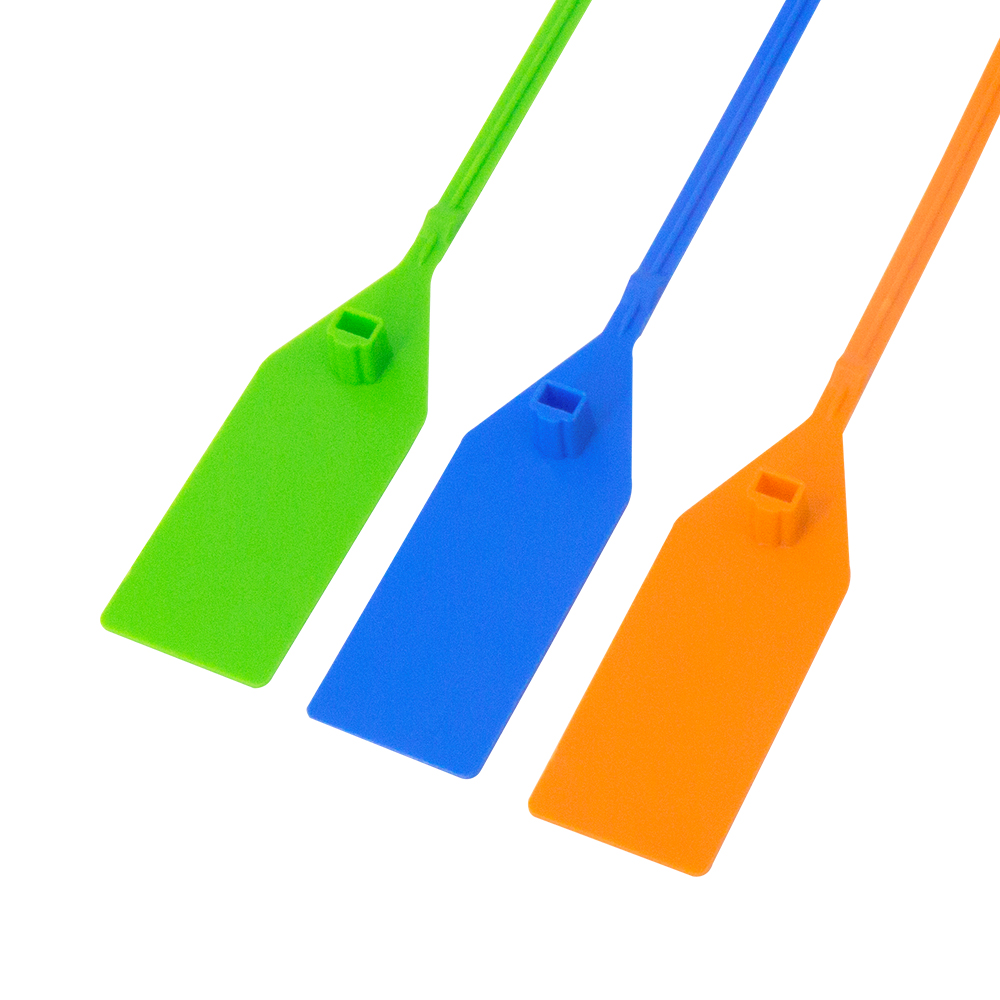
Omnichannel retail relies on moving reusable plastic distribution totes between fulfillment centers and storefronts. These totes carry high-value electronics and cosmetics. High-quality 465mm Serrated Flat Strip Large Tag PP Security Seals frequently lock the interlocking lids of these containers. Warehouse automation systems scan the large barcode tag to route the tote to the correct loading bay. This seamlessly integrates physical security with digital inventory management.
Actionable Selection Guide: Choosing the Right Seal
Evaluating Length and Flexibility
The strap length dictates field versatility. Standard 200mm seals work fine for small zipper pouches. However, logistics operators frequently encounter bulky hardware or awkwardly spaced locking points on industrial roll cages. In these demanding scenarios, a longer seal becomes mandatory. Opting for a 465mm length provides the necessary reach. It secures almost any application without needing to string multiple seals together. Linking multiple seals is a dangerous practice that severely compromises security and violates compliance standards.
Locking Mechanisms: Serrated Flat Strip vs. Smooth
The texture of the strap significantly impacts manipulation resistance. Smooth cylindrical straps sometimes fall victim to sophisticated shimming techniques. In contrast, a serrated flat strip features engineered teeth along its entire length. These serrations interlock deeply with the chamber mechanism to provide exceptional grip strength. The flat profile prevents the strap from twisting or slipping out of place. This geometry makes it exponentially more difficult for bad actors to pick the lock.
The Importance of a Large Tag for Customization
A security seal acts as a vital data carrier in digitized supply chains. Small tags limit printed information to a basic serial number. A large tag provides ample surface area for high-contrast laser printing. Logistics companies can incorporate company logos and large-format barcodes. Larger barcodes are significantly easier for warehouse scanners to read from a distance. A high first-pass read rate reduces manual data entry errors and accelerates dock processing times.
Best Practices for Applying and Tracking Your Security Seals
Standard Operating Procedures for Application
A premium security seal only works if ground staff apply it correctly. Logistics companies must rigorously train personnel on strict procedures. The operator must thread the tail through the hasp and into the locking chamber in the correct direction. Next, they must pull the seal as tight as possible against the latch to remove slack. Finally, the operator must perform a mandatory tug test. Pulling firmly backward verifies that the locking teeth have fully engaged.
Digital Tracking and Logging Systems
Physical application requires digital accountability. Personnel must scan the barcode the exact moment they apply the seal. They log this data into the shipping manifest or warehouse management system. A comprehensive log records the specific seal number, application time, trailer ID, and employee ID. This digital handshake creates a verifiable audit trail. The system immediately flags any discrepancy at the receiving end.
Inspection and Safe Removal Protocols
Receiving personnel must follow strict inspection protocols before touching the seal at the destination. They physically examine the plastic for subtle signs of tampering like stress whitening, glue residue, or tiny cut marks. They verify that the physical serial number perfectly matches the digital manifest. Personnel only remove the seal after this dual verification. They must use appropriate safety snips to cut the tough plastic. This prevents hand injuries and ensures complete destruction of the device to prevent reuse.
Conclusion
Securing your supply chain is more critical today than ever before. Equipping your team with the right tools represents the first vital step in preventing costly cargo theft. Plastic indicative seals offer a phenomenal balance between robust tracking capabilities and operational budget constraints. They prove to be both highly reliable and cost-effective.
Investing in advanced engineering features empowers your workforce to operate faster and safer. Long serrated strips provide superior grip, while large scannable tags reduce logistics friction. Upgrade your security systems today to protect your valuable assets. Ensure your cargo remains safe and trackable from the loading dock to final delivery. For highly engineered, reliable solutions, explore the PP Security Seal options at Junyue to match your specific operational requirements.
FAQ
What is the difference between a PP security seal and a nylon seal?
Polypropylene is generally more cost-effective and highly resistant to industrial chemicals. It offers a much clearer visual indication of tampering because the plastic turns stark white when stressed. Nylon is slightly more rigid but costs more to manufacture. Nylon can also absorb ambient moisture, which may alter its performance in highly humid environments.
Can a PP security seal be broken by hand?
While classified as indicative seals rather than barrier locks, high-quality plastic seals possess significant tensile strength. They usually require a proper cutting tool like safety snips or heavy scissors to remove safely. This specific design ensures they do not break accidentally during standard transit vibrations or rough dock handling.
Can I print my company logo and barcodes on a PP security seal?
Yes, absolutely. Models specifically designed with a large tag accommodate advanced laser printing. This feature allows companies to add high-contrast custom logos, sequential serial numbers, and scannable barcodes. The laser printing remains highly resistant to fading, scratching, and rubbing off during transit.
How do barcode security seals improve warehouse efficiency?
Barcoded seals eliminate the need for receiving clerks to manually type long serial numbers into a computer. A quick scan with a handheld device instantly verifies the shipment against the digital manifest. This drastically reduces human error, speeds up truck turnaround times at the loading dock, and keeps inventory data perfectly synced in real time.
What is the ISO 17712 standard, and do plastic seals comply?
ISO 17712 is the international standard for mechanical freight container seals. It classifies seals into three categories: Indicative, Security, and High Security. Standard plastic seals fall under the Indicative category. They fully comply with the standard's requirements for providing visible evidence of tampering, even though they are not rated to stop heavy physical breaches like bolt seals.
How does a serrated flat strip improve the seal's security?
The engineered teeth along the strip interlock tightly with the internal locking mechanism inside the chamber. This aggressive grip prevents the strap from being shimmed or pulled backward. The flat design prevents the strap from being twisted or rotated out of the locking mechanism without completely destroying the seal housing.