

- Home
-
- Industries
-

How PP Security Plastic Seals Boost Supply Chain Reliability & Peace of Mind
Views: 0 Author: Site Editor Publish Time: 2026-10-15 Origin: Site


At a Glance
Section
Summary
What Are PP Security Plastic Seals, and How Do They Function?
Explores the fundamental definition, material composition, mechanical locking principles, and structural anatomy of polypropylene-based security indicators.
How Do PP Security Plastic Seals Contribute to Supply Chain Security?
Analyzes how tamper-evident indicators, unique serial numbering, and barcode tracking deter pilferage and ensure strict regulatory compliance.
What Are the Advantages of Using PP Security Plastic Seals?
Details the cost-effectiveness, chemical resistance, tensile strength, and eco-friendly virgin material benefits favored by global enterprises.
How Do You Choose the Right PP Security Plastic Seals for Your Needs?
Provides a rigorous framework for selecting appropriate lengths, locking structures, and custom printing configurations for diverse cargo applications.
Best Practices When Using PP Security Plastic Seals
Outlines professional protocols for inventory management, correct application techniques, audit procedures, and lifecycle maintenance.
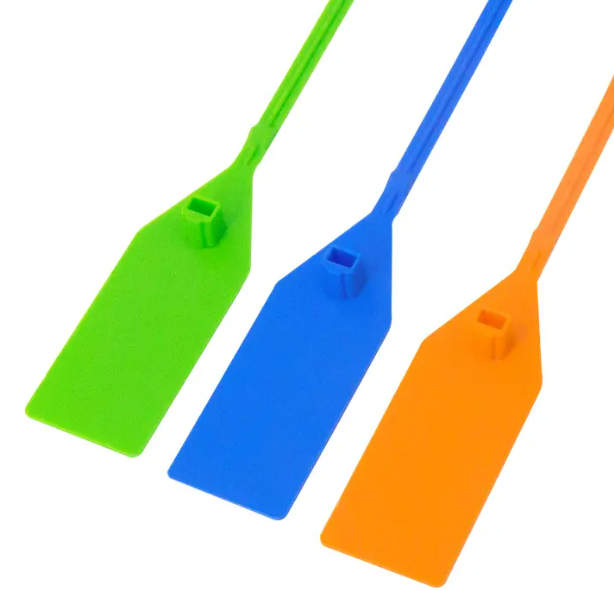
What Are PP Security Plastic Seals, and How Do They Function?
Polypropylene security seals, commonly known as PP security plastic seals, represent a pinnacle of modern asset protection engineering within industrial logistics. Fabricated from premium-grade thermoplastic polymer, these single-use indicators are designed to provide immediate visual confirmation of tampering while securing transport enclosures, utility meters, and cargo bags. From an engineering standpoint, polypropylene offers an optimal balance of rigidity, tensile strength, and chemical inertia, making it exceptionally well-suited for demanding transit environments ranging from freezing maritime shipping containers to high-temperature warehouse facilities.
The core mechanical principle governing these devices relies on a one-way self-locking mechanism embedded within the locking chamber. When the flexible tail or serrated strip is inserted through the locking aperture, internal locking teeth or metallic locking inserts engage unidirectionally. This prevents any reverse pulling or subtle manipulation without causing catastrophic structural fracture to the strap or housing. For instance, advanced designs like the serrated flat strip large tag PP security seal incorporate engineered gripping ridges that maximize frictional resistance and ensure permanent engagement upon closure.
European logistics operators and global freight forwarders frequently prioritize these configurations because they combine lightweight handling with uncompromising structural integrity. When designing these seals, engineers carefully calculate polymer melt flow index and injection molding parameters to ensure uniform wall thickness and predictable breaking thresholds. This precision manufacturing guarantees that any unauthorized attempt to heat, melt, or mechanically pick the locking mechanism leaves irreversible, highly visible micro-fractures, thereby alerting security personnel immediately upon destination arrival.
The structural performance of any security seal originates from its molecular composition. Utilizing virgin polypropylene ensures that the polymer chains remain uncompromised by recycled contaminants, yielding superior elongation at break and consistent impact resistance. Furthermore, ultraviolet stabilizers are frequently blended into the raw resin batch to prevent structural degradation when assets are exposed to prolonged direct sunlight during overland transit.
How Do PP Security Plastic Seals Contribute to Supply Chain Security?
Supply chain security is fundamentally built upon the pillars of accountability, visibility, and uncompromised physical deterrence. PP security plastic seals function as critical nodes in comprehensive risk management frameworks by transforming passive cargo containers into actively monitored secure environments. In contemporary global trade, where cargo handling involves numerous third-party touchpoints, ensuring that goods remain untouched from origin to destination is a paramount operational challenge.
The deployment of tamper-evident seals establishes an immediate psychological barrier against internal theft and opportunistic pilferage. When warehouse operatives and freight handlers recognize that every transport unit is secured with a uniquely numbered, barcoded security device, the perceived risk of illicit interference increases exponentially. If a breach does occur, the physical evidence is unmistakable. Rather than dealing with ambiguous stock discrepancies or disputed inventory losses, logistics managers receive definitive, forensically sound indicators of tampering that streamline investigations and insurance claims.
Furthermore, modern supply chain compliance mandates rigorous audit trails, particularly in sectors such as pharmaceuticals, food distribution, and high-value retail logistics. Regulatory frameworks require verifiable proof that cargo containers have not been opened in transit. By integrating sequential serial numbers and scannable barcodes onto the large printable tags of a high-strength polypropylene security seal solution, enterprises can seamlessly integrate physical security data into automated warehouse management systems. This bridges the gap between physical asset protection and digital traceability.
Security Feature Matrix
Security Feature
Implementation Method
Operational Benefit
Sequential Numbering
Laser Etching / Hot Stamping
Prevents unauthorized substitution and duplication
Barcode / QR Integration
High-contrast Laser Printing
Enables rapid digital logging and audit tracking
Tamper Evidence
Destructive Breakage Design
Provides instant visual confirmation of interference
Color Coding
Masterbatch Pigmentation
Facilitates route identification and departmental sorting
Establishing Chain of Custody and Traceability
Maintaining an unbroken chain of custody requires meticulous logging at every transfer station. Laser-etched serial numbers permanently fuse identification data into the plastic matrix, resisting chemical solvents and physical abrasion. When combined with handheld digital scanners, logistics teams can verify seal numbers in milliseconds, eliminating human transcription errors and securing the entire transit lifecycle.
What Are the Advantages of Using PP Security Plastic Seals?
The widespread adoption of PP security plastic seals across international shipping networks is driven by a compelling matrix of economic, operational, and environmental advantages. Unlike heavy-duty metal bolt seals or cable locks that require specialized cutting tools for removal and incur substantial unit costs, polypropylene seals offer an optimal balance of lightweight economy and reliable tamper resistance. This cost-effectiveness makes them exceptionally attractive for high-volume applications such as postal bags, airline catering carts, and retail distribution totes.
From an engineering perspective, polypropylene exhibits remarkable resistance to moisture, oils, and a wide spectrum of industrial chemicals. This chemical inertness ensures that the seals do not degrade when exposed to harsh environmental conditions or corrosive cargo contents. Additionally, their lightweight nature minimizes additional payload weight, contributing to overall fuel efficiency in long-haul freight transport. European and North American clients particularly favor these seals for their compliance with environmental standards, as virgin polypropylene is fully recyclable and can be processed safely within municipal recycling streams.
Customization versatility further elevates the value proposition of these products. Manufacturers can produce security seals in an extensive array of vibrant colors, facilitating visual route coding and immediate departmental categorization. Furthermore, large tagging surfaces accommodate extensive corporate branding, customized barcodes, and multi-language warning text. This combination of bespoke identification and robust mechanical performance ensures that enterprises can tailor their security architecture precisely to their operational risk profile.
Advantage and Impact Evaluation
Advantage Category
Technical Characteristic
Operational Impact
Economic Efficiency
Low unit production and deployment cost
Ideal for high-volume, single-use logistics applications
Chemical Resistance
Inert thermoplastic molecular structure
Resists oils, moisture, and mild acids during transit
Weight Optimization
Low density polymer composition
Reduces total freight deadweight and shipping costs
Customization Scope
Extensive color palette and laser tagging
Enhances brand visibility and visual sorting efficiency
Balancing Cost and Security in High-Volume Logistics
In modern distribution centers processing thousands of parcels daily, cost-per-unit metrics are critical. Polypropylene seals deliver enterprise-grade security without straining operational budgets. Their rapid manual application speed reduces labor overhead, allowing loading docks to process outgoing freight with maximum velocity and zero mechanical bottlenecks.
How Do You Choose the Right PP Security Plastic Seals for Your Needs?
Selecting the appropriate PP security plastic seal requires a methodical evaluation of specific operational parameters, environmental constraints, and regulatory requirements. Not all seals are engineered for identical applications; matching the physical dimensions, tensile strength, and locking design to the target asset is essential for maintaining uncompromising supply chain integrity. Facility managers must analyze variables such as aperture dimensions, expected transit duration, and environmental exposure levels before finalizing product specifications.
The first critical parameter is strap length and thickness. For standard applications such as mail sacks, courier bags, and small utility valves, shorter pull-tight seals ranging from 200 mm to 300 mm provide sufficient length and minimal excess tail waste. Conversely, bulky enclosures, truck trailer latches, and industrial containers demand extended lengths, such as a tamper-evident pull tight security seal model featuring a 465mm serrated flat strip and large printable tag area. The wider strap width and robust locking chamber ensure higher tensile breaking resistance against accidental snagging or intentional strain.
Environmental considerations also dictate material formulation. Shipments traversing extreme climates require specialized UV-stabilized polymer blends to prevent thermal embrittlement. Furthermore, enterprises must evaluate whether visual inspection alone is sufficient or if digital integration via barcodes is necessary. By conducting a thorough operational audit, supply chain directors can select seal configurations that harmonize maximum security with ergonomic efficiency, ensuring seamless integration into daily workflow procedures.
Selection Framework Table
Selection Factor
Evaluation Criteria
Recommended Specification
Application Type
Courier bags vs. Truck trailer doors
Short pull-tight vs. Long heavy-duty serrated strip
Tensile Strength
Low risk vs. High security transit
150 N for indicative use; 370 N+ for high-risk cargo
Environmental Exposure
Indoor warehousing vs. Marine transit
Standard PP vs. UV-stabilized weather-resistant PP
Data Tracking Needs
Visual auditing vs. Automated scanning
Plain numbering vs. Laser-engraved barcode/QR codes
Evaluating Aperture Requirements and Tensile Demands
The physical geometry of the sealing point dictates the maximum allowable strap thickness and head size. Technicians must measure the diameter of locking holes on latches or zippers to ensure smooth insertion. Selecting a seal with adequate tensile breaking strength prevents premature failure caused by dynamic shifting of cargo during rough maritime or overland transport.
Best Practices When Using PP Security Plastic Seals
Maximizing the efficacy of PP security plastic seals extends far beyond selecting the correct product model; it demands disciplined adherence to standardized operational protocols. Implementing rigorous chain-of-custody procedures ensures that security seals are tracked, accounted for, and audited at every stage of the supply chain lifecycle. Facility managers must establish clear guidelines governing inventory storage, sequential distribution, and final disposal of used seals.
Storage conditions play a foundational role in preserving seal integrity prior to deployment. Polypropylene inventory should be stored in climate-controlled environments away from direct sunlight, extreme heat sources, and organic solvents. Exposing raw plastic inventory to prolonged ultraviolet radiation prior to use can compromise its molecular structure, resulting in premature brittleness. Furthermore, strict inventory logs must record the serial number ranges assigned to each shipping station, preventing unauthorized acquisition or duplication by malicious actors.
During the application phase, personnel must ensure that the strap is pulled firmly to eliminate excessive slack while verifying that the locking mechanism engages with an audible click. Loose applications create exploitable gaps that can allow sophisticated tampering without breaking the seal. Finally, upon arrival at the destination, receiving teams must systematically inspect the seal, cross-reference the serial number against the shipping manifest, and document the inspection before authorized removal using appropriate cutting tools.
Lifecycle Management Table
Lifecycle Stage
Best Practice Protocol
Compliance Objective
Storage & Handling
Climate-controlled, dark, dry inventory storage
Prevents UV degradation and thermal embrittlement
Distribution Control
Strict sequential serial number logging
Eliminates internal theft and unauthorized leakage
Application Method
Firm pull-tight closure with confirmed lock click
Ensures maximum tension and removes exploitable slack
Arrival Inspection
Manifest cross-referencing and visual audit
Confirms zero tampering before cargo unloading
Operational Principles and Maintenance Protocols: To ensure optimal performance throughout the deployment lifecycle, operators must adhere to strict environmental thresholds and handling guidelines. Polypropylene security seals are engineered for single-use application within temperature ranges of minus thirty degrees Celsius to plus sixty degrees Celsius. Re-using or attempting to thermally mend severed straps severely compromises structural integrity and destroys tamper evidence. Inventory should be rotated on a first-in, first-out basis to prevent prolonged shelf-life aging. Regular audits of serial number registries and secure disposal of collected waste seals guarantee absolute regulatory compliance and eliminate potential security loopholes across the entire logistics network.



