

- Home
-
- Industries
-

What is the impact resistance of PP Material Plastic Padlock Seal?
Views: 0 Author: Site Editor Publish Time: 2026-10-25 Origin: Site


What you'll learn:
The fundamental polymer chemistry and molecular mechanics governing Polypropylene (PP) impact energy absorption.
The specific mechanical damping mechanisms that prevent physical fracture under rapid kinetic loads.
Standardized laboratory testing protocols, including Izod/Charpy notch tests and drop-weight drop impact metrics.
Industrial application scenarios where high impact resistance protects against supply chain tampering.
Comparative mechanical analysis measuring PP performance against alternative thermoplastics like Nylon, HDPE, and ABS.
Environmental, thermal, and design factors that dictate long-term impact stability under field conditions.
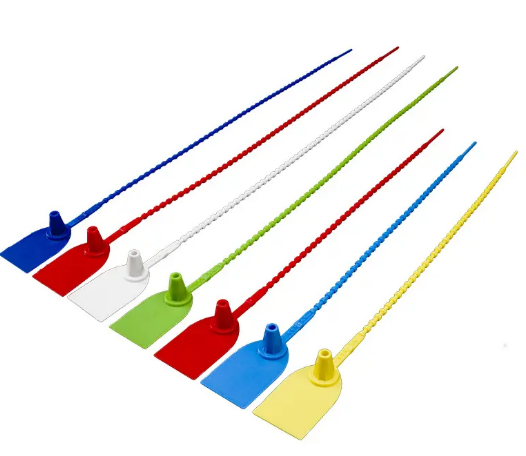
Understanding Polypropylene (PP) Material
Polypropylene (PP) is a thermoplastic addition polymer produced from monomeric propylene. Within tamper-evident security sealing applications, industrial manufacturers primarily utilize high-molecular-weight isotactic polypropylene homopolymers or block copolymers. Isotactic PP features methyl groups arranged systematically along one side of the macromolecular backbone. This regular spatial configuration fosters high molecular packing efficiency, resulting in a semi-crystalline structure that delivers an optimal combination of tensile yield strength, flexural rigidity, and impact resistance.
The mechanical behavior of a PP Security Seal is largely governed by its ratio of amorphous to crystalline domains. The crystalline regions provide structural stiffness, dimensional stability, and resistance to chemical dissolution. Conversely, the amorphous inter-crystalline tie-chain regions provide the necessary molecular flexibility to absorb mechanical shock. When subjected to sudden impact forces, these amorphous polymer chain segments uncoil and stretch, converting localized kinetic energy into thermal dissipation rather than allowing instant crack propagation.
From a processing perspective, injection moulding conditions directly dictate the final impact resistance of a plastic padlock seal. Mold temperature, melt temperature, injection speed, and hold pressure influence molecular orientation and residual internal stress. High-precision tooling ensures uniform wall thickness and prevents internal voids, which act as stress concentration points during dynamic loading. When custom-formulated with impact-modifying additives, such as ethylene-propylene rubber, the material's low-temperature toughness increases significantly.
Furthermore, sealing-grade polypropylene typically exhibits a density ranging from 0.895 to 0.905 grams per cubic centimeter for homopolymers, with a melt flow rate balanced for injection precision. Tensile strength at yield generally falls between 31 and 41 megapascals, providing the rigid structural backbone necessary to resist unauthorized pulling forces. Rockwall hardness and heat deflection temperatures further ensure that the seal withstands elevated warehouse storage temperatures without warping or losing dimensional tolerance.
Structural Features of PP Padlock Seals
Integrated Locking Hasp: Polypropylene allows the molding of thin, flexible shackle arms or wire-insert locking legs that flex during insertion without experiencing material fatigue or micro-fissuring.
Ultrasonically Welded or Molded Locking Chambers: High joint strength ensures the locking core resists blunt force impacts without separation.
Flat Printing Flag: Offers high surface energy after corona treatment, facilitating thermal transfer or laser marking of serial numbers and barcodes.
As you evaluate security options for diverse industrial shipping routes, utilizing a reliable durable polypropylene security seal designed for multi-industry transport guarantees that your supply chain maintains unbroken chain-of-custody documentation.
Impact Resistance Mechanisms
Impact resistance measures a material's capability to absorb shock energy during rapid mechanical loading without undergoing catastrophic failure, cracking, or permanent loss of functionality. In the context of a plastic padlock security seal, impact resistance dictates whether the seal can survive high-vibration transit, heavy mechanical drops, accidental strikes from handling equipment, or deliberate shock attacks designed to defeat the lock without leaving obvious evidence of tampering.
The primary energy absorption mechanism in polypropylene is viscoelastic damping. When a high-velocity impact strikes a PP Security Seal, the kinetic energy is transferred directly to the macromolecular network. If the rate of energy dissipation exceeds the rate of stress accumulation, the polymer undergoes plastic strain deformation. Under this yield mechanism, polymer chains slide past one another in a controlled fashion. This micro-yielding dissipates kinetic energy as micro-heat, preserving the primary structural integrity of the seal body and locking mechanism.
Proper product engineering significantly enhances raw material impact performance. Well-designed padlock seals incorporate generous radii at internal structural corners, variable wall transitions, and internal reinforcing ribs. Right-angled geometry creates sharp stress concentrations, where applied kinetic energy focuses at a single point, causing premature crack initiation. By distributing stress across curved surfaces and rib networks, the seal body effectively spreads external impact energy across a larger material volume.
Key Engineering Features Enhancing Impact Resistance
Stress-Relief Fillets: Replacing sharp interior corners with smooth radii reduces peak stress concentration factors significantly during side impacts.
Impact-Absorbing Outer Shell: Exterior ribs deflect direct strikes from heavy tools, protecting the internal locking mechanism from direct shock transmission.
Reinforced Locking Beak: Thickened insertion tips prevent shearing or mechanical cleavage when the shackle is subjected to sudden lateral loads.
Why this design? In our industrial experience, European logistics clients consistently request seals that perform reliably under rapid temperature shifts and high mechanical vibration during intermodal rail transport. We engineer our padlock seals with specialized impact-modified PP copolymer formulations. This modification improves energy absorption during dynamic drops without softening the internal locking jaw, ensuring security compliance even during rough handling.
Real - World Testing and Standards
To verify that a PP Security Seal meets international supply chain safety standards, manufacturers subject production samples to controlled mechanical test protocols. These tests evaluate impact performance across ambient, sub-freezing, and elevated temperature conditions, guaranteeing consistent tamper evidence under all operating environments.
The Izod Notched Impact Test is the benchmark standard for measuring the energy required to break a notched specimen with a swinging pendulum. A higher value indicates superior resistance to crack propagation originating from structural notches or surface scratches. For padlock seals, this property prevents accidental cracking around serial number engravings or molded insertion slots when subjected to sudden impact loads. Typically, standard homopolymer PP exhibits an Izod notched impact strength between 30 and 55 joules per meter at room temperature, while impact-modified copolymers can exceed 100 joules per meter.
In addition to standardized polymer lab tests, finished security seals undergo functional impact testing. The drop-weight impact test drops a specified steel mass from set heights onto critical seal areas, including the locking chamber and shackle hinge. This test simulates real-world conditions, such as heavy cargo doors slamming shut or industrial tools accidentally striking the installed seal. Under ISO and ASTM protocols, security seals must endure multiple free-fall drops onto rigid steel plates without sustaining structural disengagement or premature locking latch failure.
Laboratory Drop Testing Workflow
Environmental Conditioning: Test specimens are conditioned in a climate chamber at specified temperatures for a minimum of 24 hours.
Free-Fall Strike Execution: The conditioned seal is held in a standardized fixture and impacted at key locations using a guided drop mass.
Microscopic Fracture Analysis: Post-impact seals undergo microscopic evaluation to verify that no internal fractures, hairline cracks, or locking tab disengagements occurred.
Applications and the Importance of Impact Resistance
Padlock plastic seals are widely deployed across industries requiring simple, visual tamper evidence coupled with fast tool-free application. High impact strength is crucial in these applications to prevent false positive tampering indications caused by normal transport vibration or minor handling bumps.
In airline catering carts and duty-free trolleys, seals undergo repetitive impacts from adjacent equipment during flight turbulence and ground transportation. A brittle seal can crack or open unexpectedly, creating unnecessary security false alarms and operational delays. Impact-resistant polypropylene ensures that the seal remains secure throughout transport, breaking only when cut by authorized personnel during audit checks.
Similarly, utility providers rely on padlock seals to secure electric meters, gas valves, and water distribution lines. Installed outdoors for extended periods, these seals must withstand physical impacts, extreme weather, and accidental contact with maintenance tools without fracturing or degrading.
Primary Industrial Applications
Utility Metering and Distribution: Secures electric, gas, and water meters against unauthorized bypass while resisting accidental physical impacts from lawn care or maintenance equipment.
Airline Catering and In-Flight Carts: Protects high-value duty-free goods and food service trolleys during high-vibration air and ground transport.
Emergency Medical Equipment and Crash Carts: Provides immediate, visible tamper indication while maintaining structural integrity during rapid emergency transport.
Logistics, Tote Boxes and Freight Containers: Secures distribution totes and cargo doors across intermodal shipping routes.
To ensure long-term durability across diverse industries, selecting a robust tamper-evident padlock seal solution for industrial logistics provides an ideal balance of dynamic impact strength and clear tamper indication.
Comparing with Other Materials
When specifying plastic security seals, engineers evaluate Polypropylene (PP) against alternative polymers like High-Density Polyethylene, Nylon, and ABS polymers. Each material presents distinct tradeoffs in impact performance, tensile strength, chemical stability, and unit cost.
High-Density Polyethylene provides high low-temperature impact strength due to its extremely low glass transition temperature. However, it has a lower flexural modulus and tensile yield strength compared to PP. Consequently, an HDPE seal can stretch excessively under load, potentially compromising the locking mechanism. PP delivers a superior balance of tensile strength and impact resistance at ambient temperatures.
Nylon provides higher tensile strength and exceptional impact energy absorption. However, Nylon is hygroscopic, absorbing ambient moisture which alters its mechanical dimensions and flexural properties over time. ABS provides high impact strength and rigidity, but comes at a higher material cost, making it less economical for single-use tamper-evident security seals.
Comparative Performance Highlights
PP versus HDPE: Polypropylene offers higher stiffness and resistance to stress cracking, preventing tamperers from slipping the lock through material stretching.
PP versus Nylon: Polypropylene remains dimensionally stable in high-humidity environments, whereas Nylon absorbs water and softens, reducing locking security.
PP versus ABS: Polypropylene provides better chemical resistance against aggressive cleaning agents and industrial solvents at a more competitive cost, making it the preferred economic choice for bulk logistics applications.
Factors Affecting Impact Resistance
While pure polypropylene copolymer possesses solid inherent impact resistance, external environmental variables and manufacturing parameters significantly affect field performance. Understanding these operational factors allows engineers to optimize seal formulations for specific operational environments.
Ambient temperature is the single most critical environmental factor influencing PP impact strength. Polypropylene has a glass transition temperature ranging from minus 10 degrees Celsius to zero degrees Celsius. Above this range, the polymer exhibits ductile behavior, absorbing kinetic shocks efficiently. Below this threshold, the polymer chain mobility drops sharply, causing the material to transition from ductile yielding to brittle fracture. For cold-storage supply chains and severe winter conditions, standard homopolymer PP can become brittle if hit with sudden kinetic loads. To counter this, impact-modifying elastomers are added to maintain low-temperature ductility.
Ultraviolet radiation exposure is another critical degradation factor for seals installed on outdoor utility meters or long-haul transport containers. Unstabilized polypropylene degrades under solar ultraviolet radiation, causing tertiary carbon chain scission. This photo-oxidation leads to surface micro-cracking, discoloration, and a severe loss of impact strength. Integrating Hindered Amine Light Stabilizers and specialized carbon black pigments prevents ultraviolet-induced brittleness during extended outdoor service.
Key Factors Influencing Impact Resistance
Operating Temperature: Lowering temperatures below the glass transition point shifts the fracture mode from ductile tear to brittle snap under impact.
Ultraviolet Photo-Oxidation: Solar radiation breaks down polymer backbones, reducing impact energy absorption over time.
Color Masterbatch and Fillers: Inorganic pigments or excess filler loadings can act as internal stress concentrators, lowering dynamic toughness.
Mold Sink Marks and Voids: Inconsistent wall thicknesses create internal thermal voids during cooling, accelerating structural failure under shock loads.
Operating Maintenance Tip: Store polypropylene security seals in original moisture-barrier packaging away from direct sunlight and radiant unit heaters. Before deploying seals in sub-freezing cold-storage facilities, ensure the seals are formulated with verified impact copolymers and allowed to equalize to room temperature prior to initial locking setup.
To maximize chain-of-custody security across challenging environments, adopting a trusted high-performance PP tamper-evident security seal guarantees consistent impact toughness, visual tamper evidence, and long-term security across global supply networks.



