- Home
-
- Industries
-

Metal Seal Design: Key Considerations for Extreme Environments
Views: 0 Author: Site Editor Publish Time: 2026-07-30 Origin: Site


Industrial systems reach a critical tipping point when operations push past standard limits. Environments exceeding 260°C easily destroy conventional barriers. Deep cryogenic temperatures cause standard materials to become dangerously brittle. Extreme vacuum conditions and aggressive chemicals quickly degrade standard formulations. Standard elastomeric and polymeric materials simply fail under these harsh parameters. You cannot rely on rubber when conditions turn extreme.
This degradation carries massive operational impact. A ruptured connection forces catastrophic system downtime immediately. It triggers severe safety hazards for nearby personnel. Furthermore, leakage events cause serious regulatory compliance breaches. You face severe consequences when standard barriers fail.
This article provides engineers and procurement teams with a clear framework. We offer an evidence-based approach to solving extreme environmental challenges. We will guide you through evaluating, specifying, and implementing robust hardware. You will learn how to match a Metal Seal to specific seating loads. You will also learn how to avoid common installation pitfalls and ensure long-term operational integrity.
Key Takeaways
Transitioning to metal requires a fundamental shift in flange design; they demand specific seating loads and superior surface finishes compared to elastomers.
Optimal performance relies on a two-part system: a resilient high-strength alloy core (for springback) and a ductile outer plating (to fill micro-imperfections).
Selection between cross-sections (C-ring, O-ring, E-ring, etc.) is strictly dictated by the balance of available bolt load, pressure direction, and allowable leakage rates.
The Business Case for Metal Seals: Defining Success Criteria
Engineers must clearly identify the specific failure thresholds triggering a material upgrade. Look for environmental triggers like rapid temperature cycling. Sudden thermal shifts cause elastomers to shrink and leak. High-pressure blowouts present another major threshold. Explosive decompression is especially dangerous. Traditional materials absorb process gases under high pressure. When pressure drops rapidly, these trapped gases expand violently. They tear the elastomer apart from the inside. You avoid explosive decompression entirely by transitioning to rigid metallic structures. Chemical outgassing in vacuum environments also demands immediate upgrades.
We must also contrast the physics of different barriers. Elastomers operate as simple volume-filling components. They squeeze into a cavity and push back against the mating hardware. They rely on their bulk volume to block leaks. Conversely, metallic equivalents rely on precise plastic and elastic deformation. The core alloy acts as a stiff, energizing spring. It pushes an outer ductile plating into the microscopic asperities of the mating surface. This action creates an impenetrable mechanical bond.
Defining success metrics ensures the new installation performs as required. You need to know what a successful transition looks like. A successful transition demonstrates quantifiable helium leak rates suitable for ultra-high vacuum service. It delivers an extended Mean Time Between Failures (MTBF) in extreme applications. You reduce maintenance frequency significantly. Furthermore, the chosen materials must align perfectly with stringent API or NACE standards for sour gas and corrosive service. Meeting these standards proves system reliability.
Cross-Section Profiles and Seating Load Mechanics
Cross-section geometry heavily influences joint performance. You must match the profile perfectly to your specific system demands.
Metal C-Rings
These rings excel in high-pressure applications. They feature a distinct open slot along the inner or outer diameter. You orient this open slot facing the system pressure. The internal process pressure enters the ring cavity. It actively expands the ring outward against the flanges. This system-pressure energization increases the sealing force proportionally as internal pressure rises. C-rings require moderate seating loads. This makes them highly versatile for many standard flange designs.
Metal O-Rings
Engineers specify these tubular profiles for extreme high temperatures and pressures. They offer lower springback capabilities compared to C-rings. However, they provide exceptional structural integrity under massive compression. You can choose between vented or gas-filled variants. Vented O-rings feature small holes. These holes allow system pressure to enter the tube, preventing collapse. Gas-filled variants contain pressurized inert gas. This gas expands when heated. The expansion maintains crucial seating force during high-temperature operations.
Metal E-Rings and U-Rings
These highly specialized profiles provide tremendous springback. They require surprisingly low seating loads to function. They easily accommodate large cavity deflections and flange separation. Industries use them extensively in lightweight flanges. Aerospace applications rely on them heavily to save weight. Their remarkable flexibility compensates for thermal expansion disparities between dissimilar mating materials.
Evaluation Lens
You must map your cross-section choice directly to the available hardware bolt load. You must also calculate the rigidity of the mating flanges. Heavy flanges handle C-rings easily. Lightweight flanges demand E-rings to prevent bowing.
Cross-Section Performance Characteristics
Profile Type
Primary Application
Seating Load Requirement
Springback Capability
C-Ring
High Pressure / General Extreme
Moderate
High
O-Ring
Extreme Temperature / High Pressure
High
Low
E-Ring
Lightweight Flanges / Aerospace
Low
Very High
U-Ring
High Thermal Cycling
Low to Moderate
High
Material Selection Architecture: Core Alloys and Ductile Platings
Optimal performance requires a sophisticated two-part material architecture. You cannot rely on a single material to provide both structural resilience and microscopic conformity.
Base Metal Selection (The Spring)
The core alloy functions as a highly rigid spring. You evaluate base metals based on several critical factors. Yield strength determines structural limits. Stress relaxation rates dictate performance at high temperatures. Baseline corrosion resistance ensures longevity.
Inconel: Alloys like Inconel 718 or X-750 resist stress relaxation at extreme temperatures remarkably well. They maintain their vital elastic springback even above 600°C.
Monel: This robust nickel-copper alloy provides excellent resistance to hydrofluoric acid. It performs exceptionally well in harsh marine environments.
Stainless Steels: Standard 304 or 316 stainless steels work perfectly for moderate temperatures. They handle moderately corrosive environments efficiently.
The Role of Plating (The Gasket)
The base metal alone rarely prevents extreme gas leakage. Its surface remains too hard to conform to microscopic flange imperfections. Therefore, manufacturers apply a very soft outer plating. This outer plating plastically deforms under heavy bolt load. It flows directly into flange asperities. This action blocks all microscopic leak paths effectively.
Silver: This is the standard choice for high temperatures up to 425°C. It offers excellent flow characteristics.
Gold: Engineers specify gold for extreme corrosion resistance. It is essential for critical nuclear applications.
Nickel: Nickel plating handles aggressive chemicals flawlessly. It works well at temperatures where silver might oxidize.
PTFE: This polymeric option suits lower temperatures. It requires minimal seating loads to achieve conformity.
Galvanic Compatibility
You must assess the risk of galvanic corrosion carefully. An aggressive environment acts as a highly conductive electrolyte. If you mix incompatible metals, galvanic corrosion will rapidly destroy the joint. Always check standard galvanic series charts. Ensure complete compatibility between the base alloy, the ductile plating, and your specific flange material.
Evaluation Dimensions for Vendor and Solution Shortlisting
Selecting the right solution involves strict evaluation dimensions. Testing and validation data remain absolutely paramount. You must demand empirical evidence from all short-listed vendors. Ask for rigorous pressure-temperature cycle testing reports. Require standardized helium leak rate certifications for all custom designs. Refuse to accept theoretical data for critical applications.
Consider when to use custom engineering versus standard catalogs. Standard catalogs offer off-the-shelf dimensions for immediate availability. They speed up routine maintenance tasks. However, legacy hardware retrofits often feature non-standard groove dimensions. You should commission custom-machined profiles when retrofitting older infrastructure. Custom engineering guarantees zero-leakage performance in worn cavities.
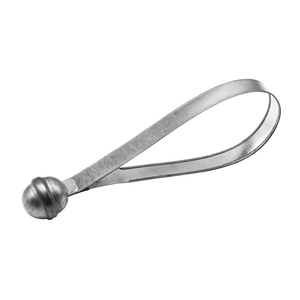
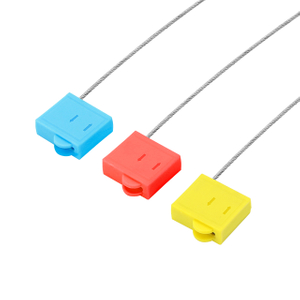
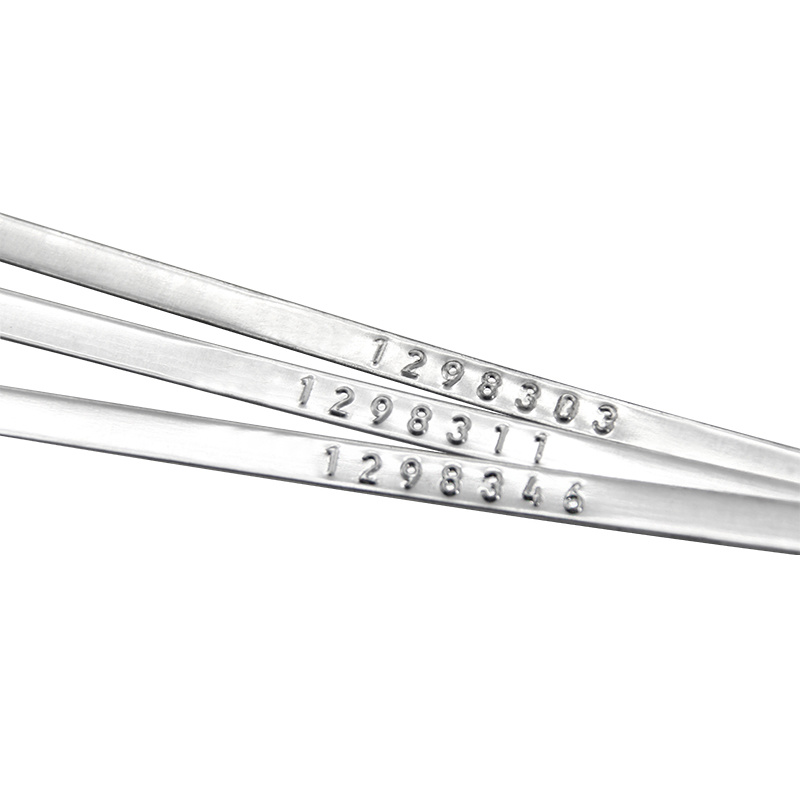
Adjacent application security also requires your close attention. Dynamic and static joint integrity is critical. Yet, complete system security in hazardous environments demands a broader view. You may need to evaluate specialized tamper-evident hardware. Utilizing components like a metal strap seal secures critical valves. It protects transport enclosures against unauthorized access or sabotage.
Evaluate supply chain resilience thoroughly. High-performance exotic alloys often experience extended global lead times. Assess the vendor's ability to source exotic metals reliably. Verify their capacity to provide rapid prototyping for your critical path projects. A vendor must prove they can deliver during a crisis.
Implementation Risks and Installation Realities
Even the best designs fail without proper installation. You must understand the realities of implementation to ensure success.
Surface Finish Tolerances
Inadequate flange surface finish is the most common point of failure. Metallic barriers demand strict Ra and Rz roughness requirements. They cannot forgive deep radial scratches across the mating face. Elastomers might fill a scratch, but rigid alloys will not. You must machine flanges to precise concentric finishes. This ensures successful plastic deformation of the plating.
Handling and Fragility
Soft platings remain highly vulnerable to human error before installation. A minor scratch ruins the microscopic barrier entirely. Technicians must follow strict cleanroom-level requirements. Proper handling protocols prevent micro-scratches from fingernails or dirty tools. Keep components in protective packaging until the exact moment of installation.
The Single-Use Limitation
You must understand the reality of permanent plastic deformation. Extreme-environment designs are almost exclusively single-use components. Once the ductile plating deforms into the flange, it cannot spring back. It permanently mirrors the original flange topography. You must factor this strict single-use limitation directly into your preventative maintenance planning. Order adequate spares for every maintenance window.
Torque Specifications and Flange Deflection
Improper torque ruins the joint geometry immediately. If bolt patterns and torque sequences are not strictly calculated, the flange will bow. Flange bowing reduces seating load unevenly across the circumference. This creates localized leak paths. Always adhere to calculated star-pattern torque sequences. Prevent localized overloading to maintain uniform spring compression across the entire joint.
Conclusion
You must approach hardware transitions systematically to guarantee success in extreme environments. Keep these core principles in mind:
Successful specification balances absolute temperature constraints, available seating load, and precise metallurgy.
Proper base alloy selection ensures long-term springback, while ductile plating guarantees gas-tight conformity.
Flange surface finish directly dictates the success or failure of the physical installation.
Strict adherence to specific handling and installation protocols prevents premature leakage events.
Audit your current flange capabilities thoroughly before contacting a vendor. Measure your existing surface finishes accurately. Calculate the maximum allowable bolt load for your specific hardware. Use this baseline data to accelerate the custom design or prototyping phase. Proper preparation ensures your extreme environment systems operate safely and continuously.
FAQ
Q: Can a metal seal be reused after maintenance?
A: No, they are strictly single-use components. During installation, the soft outer plating undergoes permanent plastic deformation to fill microscopic flange imperfections. Additionally, the core alloy experiences compression. Once the joint is opened, the plating cannot recover its original shape. Reusing the component guarantees leakage, as the deformed plating will not align perfectly with the mating surfaces again.
Q: What is the standard lead time for high-performance metal seals?
A: Standard profiles using common materials often ship within a few weeks. However, custom designs requiring exotic raw materials like Inconel, Monel, or specialized gold platings typically take 8 to 12 weeks. You must set realistic project expectations around raw material sourcing, bespoke machining, and rigorous helium leak testing processes.
Q: How do you determine the correct plating thickness?
A: Plating thickness relies directly on the surface roughness of your mating flanges. Rougher flange finishes demand thicker plating to ensure sufficient material flows into all microscopic valleys and radial grooves. Conversely, highly polished flanges require thinner plating. Engineers calculate the exact thickness by matching the plating's ductility against the measured Ra and Rz values of the hardware.
Q: Do metal seals require different flange groove dimensions than elastomers?
A: Yes, they frequently require hardware modifications. Metallic variants demand specific groove depths to compress the core alloy accurately without crushing it. They also need tighter tolerances and significantly smoother surface finishes than elastomers. If modifying the hardware is impossible, engineers must design specialized retrofit profiles to accommodate your existing elastomeric groove dimensions safely.